Can Anxiety Mimic Heart Disease?
Can Anxiety Mimic Heart Disease?
Yes. Anxiety and panic attacks can cause physical symptoms that feel very similar to heart disease, including chest tightness, rapid heartbeat, shortness of breath, dizziness, sweating, and nausea.
However, heart problems can cause many of the same symptoms. New or unexplained chest symptoms should not automatically be blamed on anxiety.
😰 Why Anxiety Feels Like a Heart Problem
During anxiety, the body releases stress hormones that activate the “fight-or-flight” response.
This may cause:
- A racing or pounding heartbeat
- Chest tightness
- Faster breathing
- Sweating or trembling
- Dizziness or lightheadedness
- Tingling in the hands or face
- A feeling that something serious is happening
These symptoms can appear suddenly during a panic attack and may strongly resemble a cardiovascular event.
❤️ How Heart Symptoms Can Overlap
Heart disease may also cause:
- Chest pressure or squeezing
- Shortness of breath
- Palpitations
- Sweating
- Nausea
- Dizziness
- Discomfort in the arm, back, neck, or jaw
Heart-attack symptoms can sometimes be mild, and not everyone experiences classic severe chest pain.
Because of this overlap, symptoms alone cannot always reliably distinguish anxiety from heart disease.
🚶 Does Exercise Trigger the Symptoms?
Symptoms that repeatedly appear during walking, climbing stairs, or other physical activity deserve medical attention.
Coronary heart disease may cause chest discomfort or breathlessness during exertion that improves with rest.
Other concerning patterns include:
- New chest pressure with activity
- A noticeable decline in exercise ability
- Symptoms becoming more frequent
- Fainting or near-fainting
- Palpitations with severe dizziness
Anxiety can also occur during exercise, so the pattern still needs medical evaluation rather than self-diagnosis.
🩺 How Can a Doctor Tell the Difference?
An initial evaluation may include:
- Blood pressure and heart rate
- Medical and family history
- Resting ECG
- Medication and caffeine review
- Blood tests when appropriate
Depending on your symptoms and cardiovascular risk, further testing may include an echocardiogram, rhythm monitor, or exercise-related heart testing.
A physical evaluation is also important before concluding that recurring symptoms are caused by panic or anxiety.
⚠️ Who Should Be More Cautious?
Do not assume symptoms are anxiety if you also have:
- High blood pressure
- Diabetes
- High cholesterol
- Smoking history
- Kidney disease
- Known cardiovascular disease
- A strong family history of early heart disease
These factors increase the possibility that chest or breathing symptoms have a cardiovascular cause.
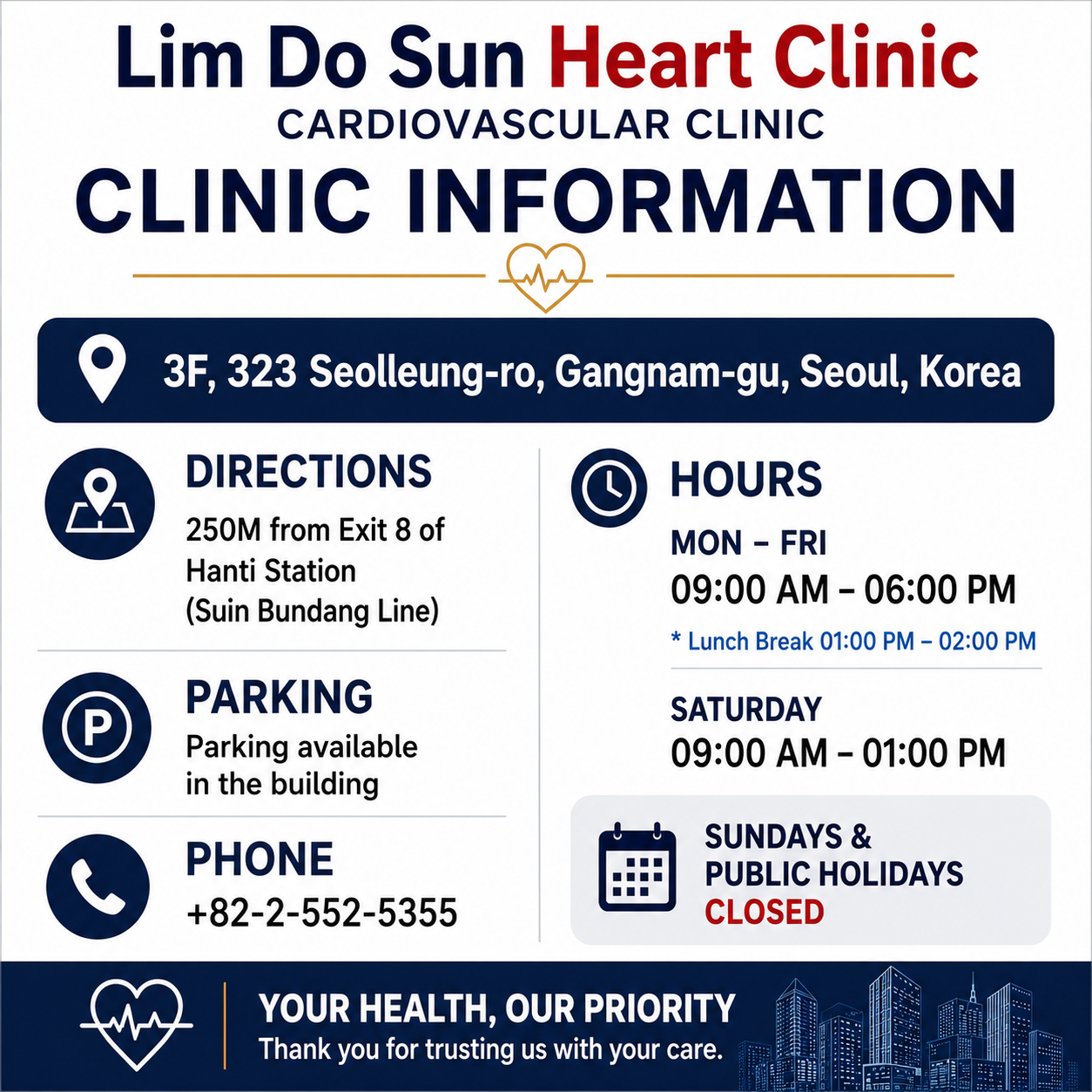
🏥 Getting Checked in Seoul
An internal medicine clinic is a practical starting point for unexplained palpitations, chest discomfort, dizziness, or breathlessness. A cardiology consultation may be appropriate when symptoms occur with exercise, cardiovascular risk factors are present, or initial tests are abnormal.
Bring:
- A description of when symptoms occur
- How long each episode lasts
- Your medication and supplement list
- Home blood-pressure readings
- Previous ECG or heart-test results
Confirm whether English-language support and same-day ECG testing are available.
🚑 When to Call 119
Call 119 in Seoul immediately for severe or persistent chest pressure, major breathing difficulty, fainting, loss of consciousness, or chest discomfort spreading to the arm, back, neck, or jaw.
Do not wait to see whether severe symptoms disappear because they might be anxiety.
✨ Final Thoughts
Anxiety can closely mimic heart disease because both can cause chest discomfort, palpitations, shortness of breath, sweating, and dizziness.
If symptoms are new, recurrent, triggered by exercise, or accompanied by cardiovascular risk factors, a medical evaluation is the safest way to rule out a heart problem before attributing them to anxiety.