Heart Murmur Evaluation in Seoul, Korea |
Echocardiogram and Heart Valve Assessment |
Dr. Lim Do-Sun Heart Clinic
A heart murmur is an unusual sound heard as blood moves through the heart. Some murmurs are harmless, while others may be related to heart valve disease, structural heart conditions, or changes in blood flow. Dr. Lim Do-Sun Cardiovascular Clinic in Seoul provides cardiologist-led heart murmur evaluation with echocardiography, ECG testing, and
personalized cardiovascular assessment.
What Is a Heart Murmur?
A heart murmur is an extra sound heard between normal heartbeats through a stethoscope. It may sound like a swishing, blowing, or whooshing noise.
A murmur is not a diagnosis by itself. Further evaluation may be needed to determine whether it is harmless or associated with an underlying heart condition.
Are All Heart Murmurs Dangerous?
No. Some heart murmurs are innocent and occur even when the heart is healthy.
Other murmurs may be caused by:
- Narrowed heart valves
- Leaking heart valves
- Congenital heart conditions
- Changes in heart structure
- Increased blood flow
- Anemia
- Fever
- Thyroid disorders
- Pregnancy
- Heart muscle disease
The significance of a murmur depends on its sound, location, timing, intensity, and accompanying symptoms.
Possible Symptoms Associated With a Heart Murmur
Many people with a heart murmur have no symptoms. When an underlying heart condition is present, symptoms may include:
- Shortness of breath
- Chest pain
- Heart palpitations
- Dizziness
- Fainting
- Unusual fatigue
- Reduced exercise capacity
- Swelling in the legs or ankles
- Rapid or irregular heartbeat
Patients experiencing these symptoms should consider a cardiovascular evaluation.
When Should You See a Cardiologist?
A heart murmur assessment may be recommended when:
- A murmur is detected during a health check-up
- You have unexplained shortness of breath
- You experience chest pain or palpitations
- You become dizzy or faint
- Your exercise tolerance has decreased
- You have a history of heart valve disease
- You were born with a heart condition
- A previous echocardiogram showed an abnormality
- You need a second opinion about a heart murmur
How Is a Heart Murmur Evaluated?
The cardiologist will listen to the heart and review:
- Current symptoms
- Medical history
- Family history
- Previous heart conditions
- Current medications
- Blood pressure
- Previous ECG or echocardiogram results
The murmur’s timing, location, intensity, and response to changes in body position can provide important diagnostic information.
Tests for a Heart Murmur
Echocardiogram
An echocardiogram uses ultrasound to evaluate the heart’s structure and movement. It can assess:
- Heart valve opening and closure
- Valve narrowing
- Valve leakage
- Heart chamber size
- Heart muscle thickness
- Pumping function
- Abnormal blood flow
- Congenital structural conditions
It is one of the most important tests used to investigate a heart murmur.
Electrocardiogram
An ECG records the heart’s electrical activity and may identify abnormal rhythm, heart enlargement, or signs of cardiac strain.
Chest Imaging
Chest imaging may be recommended when the cardiologist needs to examine heart size, lung congestion, or other structures inside the chest.
Exercise Stress Testing
A stress test may be considered when symptoms occur during physical activity or when the doctor needs to assess how the heart responds to exercise.
Blood Tests
Blood testing may help identify conditions that can influence blood flow or heart function, including anemia, infection, and thyroid disorders.
Heart Murmur and Heart Valve Disease
Heart murmurs are commonly associated with valve conditions such as:
- Aortic stenosis
- Aortic regurgitation
- Mitral regurgitation
- Mitral stenosis
- Tricuspid regurgitation
- Pulmonary valve disease
Valve disease may be mild and require only monitoring, or it may require medication, closer follow-up, or referral for additional treatment.
Heart Murmur in Younger Adults
A murmur in a younger person may be innocent, but evaluation may be needed when it is accompanied by:
- Fainting during exercise
- Chest pain
- Shortness of breath
- Palpitations
- Family history of sudden cardiac death
- Reduced athletic performance
An echocardiogram can help rule out structural heart conditions.
Heart Murmur in Older Adults
Heart valve changes become more common with age. Calcium buildup, valve degeneration, high blood pressure, and previous heart disease may affect blood flow through the heart.
Older adults with a newly detected murmur may benefit from echocardiography and regular cardiovascular follow-up.
Does a Heart Murmur Require Treatment?
The murmur itself is not treated. Treatment depends on the underlying cause.
Management may include:
- Regular cardiology monitoring
- Blood pressure control
- Medication
- Treatment of anemia or thyroid disease
- Lifestyle modification
- Follow-up echocardiograms
- Referral for valve repair or replacement when necessary
Harmless murmurs may not require treatment.
Heart Murmur Evaluation for International Patients
Dr. Lim Do-Sun Cardiovascular Clinic welcomes expatriates, tourists, overseas residents, and international patients seeking heart murmur evaluation in Seoul.
Patients may bring:
- Previous echocardiogram results
- ECG reports
- Medical records
- Medication lists
- Health screening reports
- Previous cardiology recommendations
These records can help the cardiologist compare findings and provide a more complete assessment.
Why Choose Dr. Lim Do-Sun Heart Clinic?
The clinic provides:
- Cardiologist-led heart murmur evaluation
- Echocardiography
- ECG testing
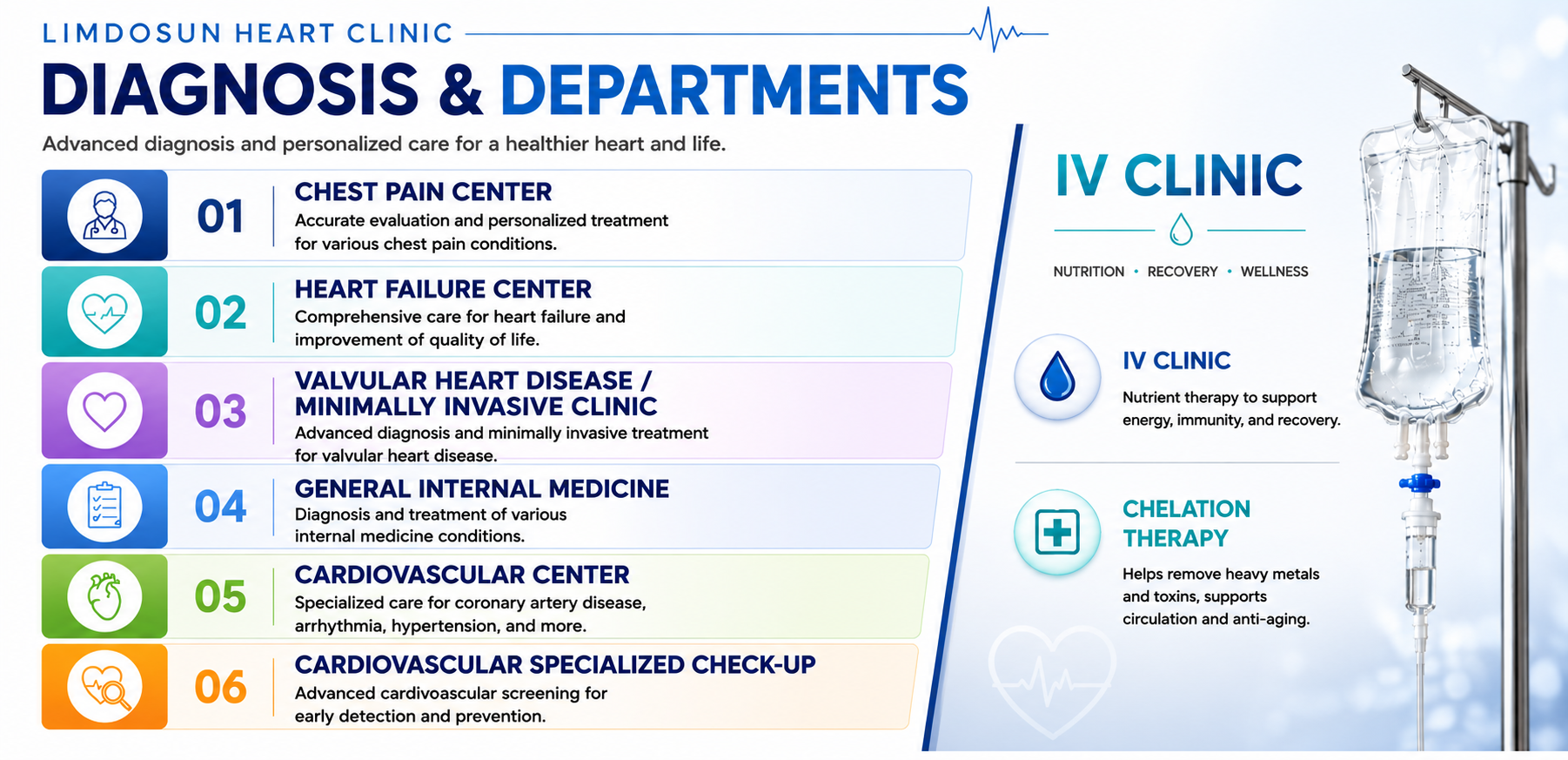
- Heart valve assessment
- Structural heart evaluation
- Cardiovascular second opinions
- Personalized follow-up planning
- International patient support
Book a Heart Murmur Evaluation in Seoul
A heart murmur may be harmless, but it can also be the first sign of heart valve or structural heart disease.
Dr. Lim Do-Sun Cardiovascular Clinic provides comprehensive heart murmur evaluation, echocardiography, and cardiovascular care in Seoul, Korea.
Frequently Asked Questions
Is a heart murmur a heart disease?
Not necessarily. A heart murmur is a sound that may be harmless or related to an underlying heart condition.
What is the best test for a heart murmur?
An echocardiogram is commonly used to evaluate heart valves, heart structure, pumping function, and blood flow.
Can anxiety cause a heart murmur?
Anxiety can increase heart rate and blood flow, making certain sounds more noticeable, but persistent murmurs should still be medically evaluated.
Can a heart murmur disappear?
Some temporary or innocent murmurs may disappear. Murmurs caused by structural or valve conditions may remain and require monitoring.
Can I exercise with a heart murmur?
Many people with harmless murmurs can exercise normally. Patients with symptoms or structural heart disease should receive medical guidance before intense exercise.
Does a heart murmur require surgery?
Most heart murmurs do not require surgery. Surgery or catheter-based treatment may be considered only when significant valve or structural heart disease is present.
How often should a heart murmur be checked?
Follow-up frequency depends on the cause and severity. Some patients need only routine monitoring, while others require regular echocardiograms.