Comprehensive Cardiovascular Assessment in Seoul, Korea
Dr. Lim Do-Sun Cardiovascular Clinic
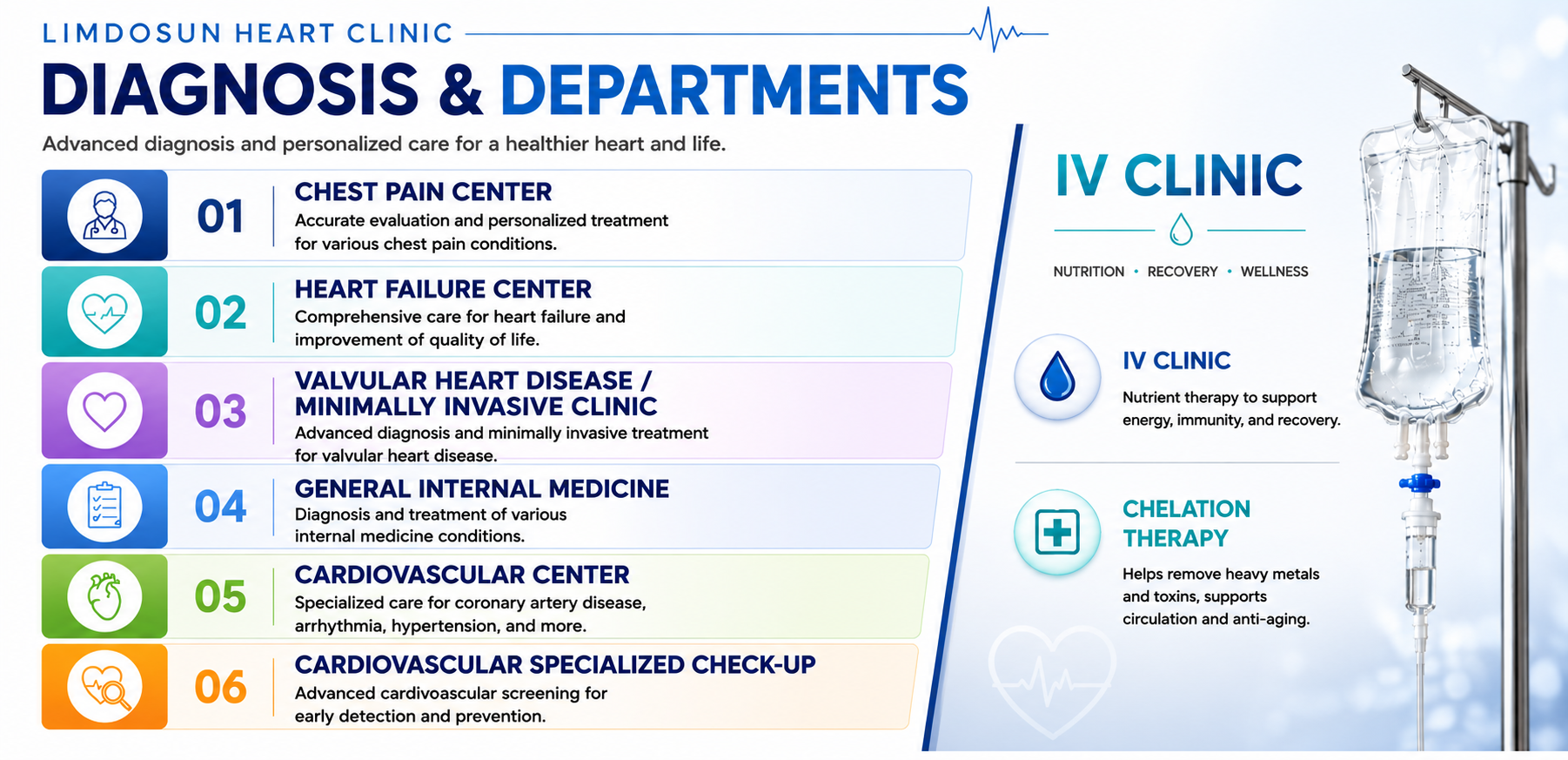
A comprehensive cardiovascular assessment in Seoul evaluates the condition of the heart, blood vessels, circulation, and major cardiovascular risk factors. At Dr. Lim Do-Sun Cardiovascular Clinic, each patient receives an individualized evaluation based on their symptoms, medical history, lifestyle, and test results. The assessment may include an electrocardiogram, echocardiography, blood pressure evaluation, vascular screening, laboratory testing, and additional cardiac examinations when medically necessary.
What Is a Comprehensive Cardiovascular Assessment?
A comprehensive cardiovascular assessment is a detailed examination designed to evaluate your current heart health and identify possible risks before they develop into serious medical problems.
Unlike a basic health screening, a cardiovascular assessment looks closely at both the heart and vascular system. It may help detect changes associated with coronary artery disease, arrhythmias, hypertension, heart valve disorders, heart muscle conditions, and atherosclerosis.
The exact examinations are selected according to each patient’s age, symptoms, medical history, family history, and cardiovascular risk profile.
Why Is Cardiovascular Screening Important?
Cardiovascular disease can progress without obvious warning signs. Some patients may feel completely healthy even while high blood pressure, arterial plaque, abnormal heart rhythms, or reduced cardiac function are developing.
Early assessment can help identify:
- High blood pressure
- High cholesterol
- Abnormal heart rhythms
- Coronary artery disease risk
- Heart valve abnormalities
- Reduced heart function
- Arterial plaque buildup
- Vascular stiffness
- Stroke risk factors
- Early signs of cardiovascular disease
Detecting these concerns early may allow patients to begin lifestyle changes, medical monitoring, or treatment before complications occur.
Who Should Consider a Cardiovascular Assessment?
A comprehensive cardiovascular examination may be recommended for adults who want to understand their current heart health, especially those with known cardiovascular risk factors.
You may benefit from an assessment if you have:
- Chest pain or pressure
- Shortness of breath
- Heart palpitations
- An irregular heartbeat
- Dizziness or fainting
- Unexplained fatigue
- Swelling in the legs
- Reduced exercise capacity
- High blood pressure
- High cholesterol
- Diabetes
- Obesity
- A history of smoking
- A family history of heart disease or stroke
Preventive evaluation may also be appropriate for adults over 40, international patients seeking a cardiac second opinion, and people planning to begin an intensive exercise program.
What May Be Included in the Assessment?
The examinations included in your cardiovascular assessment will depend on your individual condition. Not every patient requires every test.
Medical History and Cardiovascular Consultation
The assessment begins with a detailed consultation. Dr. Lim Do-Sun reviews your current symptoms, past medical history, medications, family history, lifestyle, exercise habits, and previous examination results.
This information helps determine which diagnostic tests are appropriate and prevents unnecessary examinations.
Blood Pressure and Vital Sign Evaluation
Blood pressure, pulse rate, oxygen saturation, and other vital signs provide important information about cardiovascular function.
Repeated or ambulatory blood pressure monitoring may be considered when hypertension is suspected but not clearly confirmed during a single clinic visit.
Electrocardiogram
An electrocardiogram, commonly called an ECG or EKG, records the electrical activity of the heart.
It may help identify:
- Arrhythmias
- Abnormal heart rhythms
- Electrical conduction problems
- Evidence of a previous heart attack
- Possible heart enlargement
- Other cardiac abnormalities
The test is non-invasive and usually takes only a few minutes.
Echocardiography
An echocardiogram uses ultrasound technology to create images of the heart while it is beating.
It allows the cardiologist to evaluate:
- Heart chamber size
- Heart muscle movement
- Pumping function
- Heart valve function
- Blood flow within the heart
- Fluid around the heart
- Structural abnormalities
Echocardiography is painless and does not use radiation.
Exercise Stress Testing
An exercise stress test evaluates how the heart responds to physical activity. The patient usually walks on a treadmill while heart rhythm, blood pressure, and symptoms are monitored.
This test may help assess:
- Exercise-related chest discomfort
- Reduced exercise tolerance
- Exercise-induced arrhythmias
- Possible reduced blood flow to the heart
- Cardiovascular fitness and recovery
A stress test is recommended only when it is medically appropriate and safe for the patient.
Holter Monitoring
A Holter monitor continuously records the heart’s electrical activity, usually for 24 hours or longer.
It may be useful for patients whose palpitations, dizziness, or irregular heartbeats do not occur during a short clinic-based ECG.
Longer monitoring may help detect intermittent rhythm abnormalities that would otherwise be missed.
Carotid Artery Ultrasound
Carotid ultrasound examines the arteries that carry blood to the brain.
It may identify:
- Plaque accumulation
- Narrowing of the carotid arteries
- Changes associated with atherosclerosis
- Potential stroke risk factors
This examination is non-invasive and does not expose the patient to radiation.
Peripheral Vascular Assessment
A vascular evaluation examines circulation outside the heart, particularly in the arms and legs.
It may help detect:
- Peripheral artery disease
- Reduced blood flow
- Arterial stiffness
- Abnormal differences in blood pressure between the limbs
- Early vascular aging
The results may provide a broader understanding of the patient’s overall cardiovascular condition.
Cardiovascular Blood Tests
Laboratory testing may be recommended to evaluate risk factors that cannot be identified through imaging alone.
Blood tests may include:
- Total cholesterol
- LDL cholesterol
- HDL cholesterol
- Triglycerides
- Fasting blood glucose
- HbA1c
- Kidney function
- Liver function
- Inflammatory markers
- Electrolytes
- Other cardiac or metabolic indicators
The selected tests depend on the patient’s medical history and clinical findings.
Personalized Cardiovascular Risk Analysis
Test results should not be interpreted separately. A slightly abnormal result may have different significance depending on the patient’s age, symptoms, lifestyle, and other risk factors.
Dr. Lim Do-Sun combines the findings from your consultation, physical examination, imaging, laboratory results, and cardiovascular tests to create an individualized assessment.
The final evaluation may address:
- Current cardiovascular condition
- Estimated heart disease risk
- Stroke risk factors
- Blood pressure management
- Cholesterol management
- Need for additional testing
- Lifestyle recommendations
- Medication considerations
- Follow-up schedule
Conditions That May Be Evaluated
A comprehensive cardiovascular assessment may help evaluate or identify signs associated with:
- Hypertension
- Hyperlipidemia
- Coronary artery disease
- Cardiac arrhythmias
- Atrial fibrillation
- Heart valve disease
- Cardiomyopathy
- Heart failure
- Atherosclerosis
- Peripheral artery disease
- Carotid artery disease
- Metabolic cardiovascular risk
Screening does not automatically confirm a diagnosis. Additional testing may be required if an abnormality is found.
Cardiovascular Assessment for Chest Pain
Chest discomfort does not always come from the heart, but it should not be ignored.
A cardiovascular evaluation may be recommended when chest pain:
- Occurs during exercise
- Feels like pressure, squeezing, or heaviness
- Spreads to the arm, shoulder, back, neck, or jaw
- Is accompanied by shortness of breath
- Occurs with sweating, nausea, or dizziness
- Has become more frequent or severe
Sudden or severe chest pain may require emergency medical care rather than a routine outpatient appointment.
Assessment for Palpitations and Irregular Heartbeat
Palpitations may feel like the heart is racing, fluttering, pounding, pausing, or skipping beats.
The evaluation may include an ECG, echocardiogram, Holter monitoring, blood tests, or other rhythm assessments depending on how frequently the symptoms occur.
While many palpitations are not dangerous, persistent or recurring symptoms should be medically evaluated.
Preventive Heart Screening Without Symptoms
You do not need to have symptoms to benefit from cardiovascular screening.
Preventive assessment may be especially valuable if you have multiple risk factors such as age, hypertension, diabetes, high cholesterol, smoking, obesity, limited physical activity, or a family history of premature heart disease.
The goal is not to perform every available examination. The goal is to identify the most appropriate tests for your personal risk level.
Why Choose Dr. Lim Do-Sun Cardiovascular Clinic?
Patients choose Dr. Lim Do-Sun Cardiovascular Clinic in Seoul for specialist-led evaluation focused specifically on heart and vascular health.
The clinic emphasizes:
- Cardiologist-led consultation
- Individualized examination planning
- Comprehensive cardiac and vascular evaluation
- Evidence-based diagnostic testing
- Clear explanation of examination results
- Personalized prevention strategies
- Ongoing cardiovascular monitoring
- Second opinions for international patients
Rather than providing the same screening package to every patient, the assessment is adjusted according to individual symptoms and medical needs.
Cardiovascular Second Opinion in Seoul
International patients may visit the clinic for a second opinion after receiving an abnormal ECG, echocardiogram, CT scan, blood test, or cardiovascular diagnosis in another country.
Patients are encouraged to bring:
- Previous medical reports
- ECG results
- Echocardiogram reports
- CT or MRI images
- Laboratory results
- Current medication lists
- Records of previous procedures
- A written summary of symptoms
Reviewing previous records can help reduce repeated testing and provide a more complete understanding of the patient’s condition.
What to Expect During Your Visit
Your appointment will usually begin with a medical consultation and review of your symptoms and cardiovascular risk factors.
Recommended examinations may be completed during the same visit when available. Some specialized tests may require advance preparation or a separate appointment.
After testing, the cardiologist will explain the findings, discuss whether additional evaluation is necessary, and provide recommendations for treatment, prevention, or follow-up.
Preparing for Your Cardiovascular Assessment
Preparation depends on the examinations being performed.
General recommendations may include:
- Bring previous test results and medical records
- Prepare a list of current medications
- Avoid heavy exercise before the appointment
- Avoid excessive caffeine if being assessed for palpitations
- Wear comfortable clothing for a stress test
- Follow fasting instructions when blood tests are scheduled
- Inform the clinic about implanted medical devices
- Report any allergies or previous reactions to contrast agents
The clinic will provide specific preparation instructions when your appointment is confirmed.
How Long Does the Assessment Take?
The total appointment time depends on the number and type of examinations included.
A basic consultation and initial testing may be completed relatively quickly, while comprehensive imaging, stress testing, Holter monitoring, or additional laboratory examinations may require more time or follow-up visits.
International patients should provide their medical history in advance whenever possible so the clinic can prepare an appropriate examination plan.
Can International Patients Receive Cardiovascular Screening in Seoul?
Yes. International residents, business travelers, medical tourists, and visitors to Korea can receive cardiovascular evaluation in Seoul.
The clinic can review overseas medical records and help patients understand whether they require preventive screening, symptom-based testing, continued monitoring, or a specialist second opinion.
Availability of interpretation or international patient assistance should be confirmed before booking.
When Should You Seek Emergency Care?
An outpatient cardiovascular assessment is not a substitute for emergency treatment.
Seek immediate emergency medical attention if you experience:
- Sudden or severe chest pain
- Severe shortness of breath
- Loss of consciousness
- Sudden weakness or numbness on one side
- Difficulty speaking
- A very rapid or irregular heartbeat with faintness
- Cold sweating with chest pressure
- Symptoms suggesting a heart attack or stroke
Do not delay emergency care while waiting for a scheduled clinic appointment.
Book a Comprehensive Cardiovascular Assessment in Seoul
A comprehensive cardiovascular assessment can provide a clearer understanding of your heart, circulation, and long-term cardiovascular risk.
At Dr. Lim Do-Sun Cardiovascular Clinic in Seoul, each examination is selected according to the patient’s symptoms, history, and medical needs. Whether you are seeking preventive screening, evaluation of concerning symptoms, ongoing heart monitoring, or a cardiovascular second opinion, the goal is to detect potential problems early and create a personalized plan for better heart health.
Frequently Asked Questions
What is included in a comprehensive cardiovascular assessment?
The assessment may include a consultation, blood pressure measurement, ECG, echocardiography, vascular ultrasound, blood tests, exercise stress testing, and heart rhythm monitoring. The exact tests are selected individually.
Can I receive cardiovascular screening even without symptoms?
Yes. Preventive cardiovascular screening may be appropriate for adults with risk factors such as hypertension, diabetes, high cholesterol, smoking, obesity, or a family history of heart disease.
How long does a cardiovascular assessment take?
The duration depends on the recommended examinations. Some tests can be completed during one visit, while Holter monitoring or specialized testing may require additional time.
Does an echocardiogram use radiation?
No. An echocardiogram uses ultrasound waves and does not involve radiation exposure.
Can the clinic review results from another hospital or country?
Yes. Patients may bring previous medical reports, imaging results, ECG records, blood tests, and medication information for review during a cardiovascular second-opinion consultation.
Is fasting required before the examination?
Fasting may be required for certain blood tests but is not necessary for every cardiovascular examination. Follow the clinic’s preparation instructions before your appointment.
Can tourists receive a heart check-up in Seoul?
Yes. International visitors can arrange cardiovascular screening or specialist consultation during their stay in Seoul, subject to appointment availability.
What happens if an abnormal result is found?
The cardiologist will explain the finding and may recommend additional testing, medication, lifestyle changes, follow-up monitoring, or hospital-based treatment depending on the condition.
How often should I receive cardiovascular screening?
Screening frequency depends on age, symptoms, medical history, and risk factors. Patients with hypertension, diabetes, high cholesterol, or established cardiovascular disease may require more frequent monitoring.
Is a cardiovascular assessment the same as a general health check-up?
No. A cardiovascular assessment focuses specifically on the heart, blood vessels, circulation, rhythm, and cardiovascular risk factors. A general health check-up covers a wider range of organ systems but may provide less detailed cardiac evaluation.