Heart Symptoms in Seoul, Korea |
Understand Chest Pain, Palpitations and Breathlessness
with Dr. Lim Do-Sun
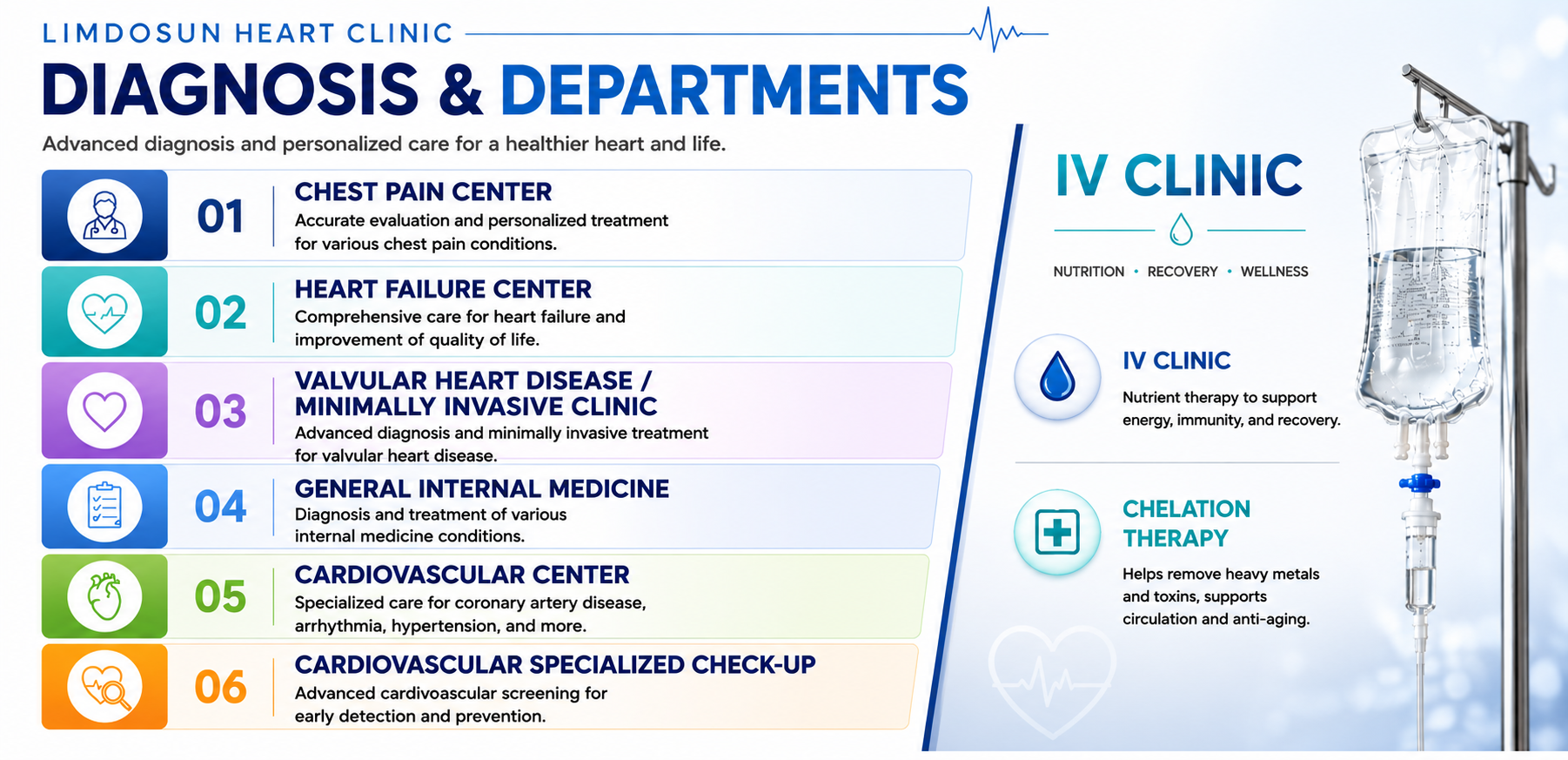
Common heart symptoms include chest pain, palpitations, shortness of breath, dizziness, fainting, unusual fatigue, and reduced exercise capacity. At Dr. Lim Do-Sun Cardiovascular Clinic in Seoul, patients can receive a cardiologist-led evaluation to determine whether symptoms may be related to heart rhythm, coronary arteries, blood pressure, heart valves, or cardiac function. Testing may include an ECG, echocardiogram, Holter monitoring, stress testing, blood tests, or vascular assessment.
Should You See a Cardiologist for Heart Symptoms?
Heart conditions do not always cause severe or obvious symptoms. Some patients experience chest pressure, while others notice breathlessness, fatigue, dizziness, or a decline in exercise performance.
A cardiovascular evaluation may be appropriate when symptoms:
- Occur repeatedly
- Develop during exercise
- Are becoming more frequent
- Interrupt normal activities
- Appear with dizziness or fainting
- Continue despite previous normal tests
- Occur with high blood pressure, diabetes, or high cholesterol
- Develop in someone with a family history of heart disease
Early evaluation can help identify cardiovascular problems before they become more serious.
Common Heart Symptoms
Patients may visit Dr. Lim Do-Sun Cardiovascular Clinic for:
- Chest pain, pressure, or tightness
- Heart palpitations
- Rapid or irregular heartbeat
- Skipped heartbeats
- Shortness of breath
- Dizziness or lightheadedness
- Fainting
- Unusual fatigue
- Reduced exercise tolerance
- Swelling in the legs or ankles
- Pain spreading to the arm, back, neck, or jaw
These symptoms do not always mean that a patient has heart disease. However, medical testing may be needed to rule out cardiovascular causes.
Chest Pain and Chest Pressure
Heart-related chest discomfort may feel like squeezing, heaviness, pressure, burning, or tightness.
It may occur:
- During exercise
- While walking uphill
- During emotional stress
- In cold weather
- Together with shortness of breath
- With pain spreading to the arm, shoulder, jaw, or back
Chest pain can also result from muscle strain, digestive problems, anxiety, or lung conditions. A cardiologist assesses the symptom pattern, medical history, and cardiovascular risk factors to determine whether heart testing is necessary.
Sudden or severe chest pain requires emergency medical attention.
Heart Palpitations and Irregular Heartbeat
Palpitations may feel like the heart is racing, fluttering, pounding, skipping beats, or beating irregularly.
Possible causes include:
- Arrhythmia
- Stress or anxiety
- Caffeine
- Sleep deprivation
- Dehydration
- Thyroid problems
- Anemia
- Medication effects
Because an abnormal rhythm may occur only occasionally, it may not appear during a short ECG. Holter monitoring or longer-term rhythm recording may therefore be recommended.
Shortness of Breath
Breathlessness can be connected to the heart, lungs, blood, fitness level, or other medical conditions.
Possible cardiovascular causes include:
- Reduced heart pumping function
- Heart valve disease
- Arrhythmia
- Coronary artery disease
- High blood pressure
- Fluid accumulation
Cardiology assessment may be helpful when shortness of breath occurs during light activity, while climbing stairs, or when lying down.
Dizziness and Fainting
Repeated dizziness, lightheadedness, or fainting may be associated with:
- Low blood pressure
- Slow or rapid heartbeat
- Arrhythmia
- Heart valve disease
- Medication effects
- Reduced blood flow
Evaluation is especially important when fainting occurs during exercise, happens without warning, or appears with chest pain or palpitations.
Unusual Fatigue and Reduced Exercise Capacity
Cardiovascular problems may sometimes cause a gradual loss of stamina rather than obvious chest pain.
Patients may notice:
- Difficulty climbing stairs
- Breathlessness during light activity
- Needing more breaks while walking
- Slow recovery after exercise
- Persistent tiredness
- A sudden decline in physical performance
An ECG, echocardiogram, blood test, or stress test may help identify the possible cause.
Swelling in the Legs or Ankles
Leg swelling may result from prolonged standing, vein problems, medication, kidney conditions, or cardiovascular disease.
Heart-related swelling may occur together with:
- Shortness of breath
- Sudden weight gain
- Fatigue
- Reduced exercise tolerance
- Difficulty breathing while lying down
A medical evaluation may include heart function, circulation, blood pressure, medication, and kidney function.
Heart Symptoms in Women
Women may experience heart symptoms differently. Severe chest pain is not always present.
Possible symptoms include:
- Unusual fatigue
- Shortness of breath
- Nausea
- Jaw or back discomfort
- Dizziness
- Indigestion-like pressure
- Sleep disturbance
- Mild chest tightness
Persistent or unexplained symptoms should be evaluated, particularly in women with diabetes, high cholesterol, high blood pressure, or a family history of cardiovascular disease.
Heart Symptoms in Younger Adults
Younger adults may experience palpitations, chest discomfort, dizziness, fainting, breathlessness, or smartwatch heart-rate alerts.
Symptoms may be related to stress, caffeine, dehydration, thyroid problems, anemia, lack of sleep, or arrhythmia.
Recurring symptoms should not automatically be assumed to be caused by anxiety without an appropriate medical assessment.
Heart Symptoms During Exercise
Symptoms during physical activity deserve particular attention.
These may include:
- Chest pressure
- Shortness of breath
- Palpitations
- Dizziness
- Fainting
- Unusual fatigue
- Pain spreading to the arm or jaw
Exercise-related symptoms may require testing for coronary artery disease, arrhythmia, abnormal blood pressure response, heart valve disease, or reduced heart function.
How Heart Symptoms Are Evaluated
Dr. Lim Do-Sun may review:
- When the symptoms began
- How often they occur
- How long they last
- Whether they occur at rest or during exercise
- Current medications
- Previous medical conditions
- Family history
- Cardiovascular risk factors
- Previous test results
Diagnostic testing is selected according to the patient’s symptoms rather than using the same testing plan for every patient.
Tests for Heart Symptoms
Electrocardiogram
An ECG records the heart’s electrical activity and may detect rhythm or conduction abnormalities.
Echocardiogram
An echocardiogram examines heart structure, pumping function, valves, and blood flow.
Holter Monitoring
A Holter monitor records the heartbeat over a longer period to identify intermittent arrhythmias.
Exercise Stress Testing
A stress test evaluates how the heart responds to physical activity and may be recommended for exercise-related symptoms.
Blood and Blood Pressure Tests
Blood testing may assess cholesterol, blood sugar, anemia, thyroid function, and kidney function. Home or ambulatory monitoring may also be used to evaluate blood pressure changes.
International Patients with Heart Symptoms in Seoul
Dr. Lim Do-Sun Cardiovascular Clinic can evaluate international residents, expatriates, students, business travelers, and visitors experiencing non-emergency heart symptoms in Seoul.
Patients may bring:
- Overseas medical reports
- ECG or echocardiogram results
- Blood test results
- Medication lists
- Smartwatch ECG recordings
- Blood pressure records
- Previous cardiac imaging
A detailed review can help determine whether additional testing, treatment, or ongoing monitoring is necessary.
Why Choose Dr. Lim Do-Sun Cardiovascular Clinic?
The clinic provides:
- Cardiologist-led heart symptom evaluation
- Personalized diagnostic testing
- Heart rhythm assessment
- Heart function and valve evaluation
- Blood pressure management
- Cardiovascular risk assessment
- Review of previous medical records
- Clear explanations of test results
- Preventive cardiovascular care
- Support for international patients
The goal is to identify the cause of symptoms while avoiding unnecessary examinations whenever possible.
When Heart Symptoms Require Emergency Care
Seek emergency medical assistance immediately for:
- Sudden or severe chest pain
- Heavy chest pressure
- Pain spreading to the arm, back, neck, or jaw
- Chest discomfort with sweating or nausea
- Severe shortness of breath
- Fainting or loss of consciousness
- A rapid or irregular heartbeat with severe weakness
- Sudden facial drooping or difficulty speaking
- Sudden weakness on one side of the body
A routine outpatient consultation should never delay emergency treatment.
Book a Heart Symptom Evaluation in Seoul
Recurring chest pain, palpitations, breathlessness, dizziness, fatigue, or reduced exercise capacity should not be ignored.
At Dr. Lim Do-Sun Cardiovascular Clinic in Seoul, patients can receive an individualized cardiovascular consultation and appropriate testing based on their symptoms, medical history, and risk factors.
Frequently Asked Questions
What are common symptoms of heart disease?
Common symptoms include chest pressure, palpitations, shortness of breath, dizziness, fainting, fatigue, reduced exercise tolerance, and leg swelling.
Does chest pain always mean a heart problem?
No. Chest pain may also be caused by digestive, muscular, lung, or anxiety-related conditions. Cardiovascular testing may be needed to rule out heart disease.
Should I see a cardiologist for palpitations?
Yes, particularly when palpitations happen repeatedly or occur with chest pain, shortness of breath, dizziness, or fainting.
Can a normal ECG rule out all heart problems?
No. A short ECG may not detect an arrhythmia that occurs intermittently. Holter monitoring may be recommended.
Why am I short of breath when climbing stairs?
Possible causes include low fitness, anemia, lung disease, heart conditions, or abnormal blood pressure. Medical evaluation can help identify the cause.
Can anxiety cause heart-like symptoms?
Yes. Anxiety may cause chest tightness, palpitations, rapid breathing, and dizziness. However, recurring symptoms should first be appropriately evaluated.
Can a cardiologist review smartwatch heart data?
Yes. Patients may bring smartwatch ECG recordings, heart-rate alerts, or screenshots, although these do not replace medical diagnostic testing.
When should I go to an emergency room?
Seek emergency care for severe chest pain, sudden breathing difficulty, fainting, stroke-like symptoms, or a rapid irregular heartbeat with weakness or sweating.