Chest Pain Clinic in Seoul, Korea |
Find the Cause of Chest Discomfort with Dr. Lim Do-Sun
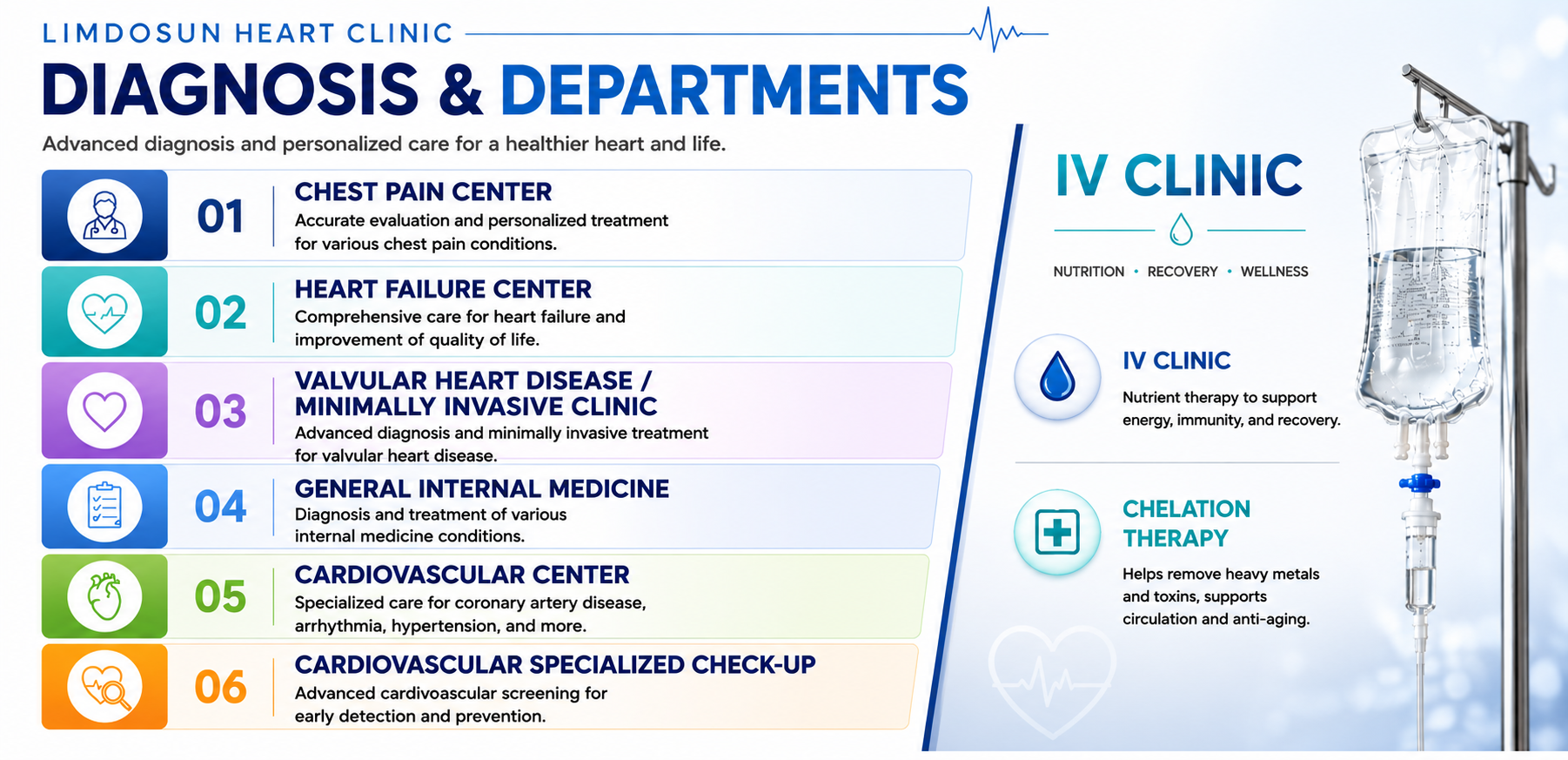
Chest pain may be related to the heart, digestive system, lungs, muscles, or stress, making an accurate diagnosis important. At Dr. Lim Do-Sun Cardiovascular Clinic in Seoul, patients receive a cardiologist-led evaluation based on their symptoms, medical history, and cardiovascular risk factors. Testing may include an electrocardiogram, echocardiogram, blood tests, Holter monitoring, or exercise stress testing. Sudden, severe, or worsening chest pain should always be treated as a medical emergency.
When Should You Visit a Chest Pain Clinic?
A cardiovascular consultation may be appropriate when chest discomfort:
- Occurs repeatedly
- Develops during exercise
- Feels like pressure, squeezing, or heaviness
- Spreads to the arm, back, neck, shoulder, or jaw
- Appears with palpitations or breathlessness
- Becomes more frequent or intense
- Occurs in someone with cardiovascular risk factors
- Continues despite previous normal test results
Chest pain should not automatically be assumed to be indigestion, muscle tension, or anxiety without appropriate medical assessment.
What Does Heart-Related Chest Pain Feel Like?
Heart-related chest discomfort does not always feel like sharp pain. Patients may describe it as:
- Pressure
- Tightness
- Heaviness
- Squeezing
- Burning
- Fullness
- A weight on the chest
- Indigestion-like discomfort
Symptoms may appear during walking, climbing stairs, exercising, emotional stress, or exposure to cold weather. They may improve with rest and return during physical activity.
Common Causes of Chest Pain
Chest pain can have many possible causes.
Cardiovascular Causes
Possible heart-related causes include:
- Coronary artery disease
- Angina
- Arrhythmia
- Heart valve disease
- Inflammation around the heart
- High blood pressure
- Reduced heart function
- Aortic conditions
Non-Cardiac Causes
Chest discomfort may also result from:
- Acid reflux
- Gastritis
- Muscle strain
- Rib or chest wall inflammation
- Anxiety or panic attacks
- Lung conditions
- Nerve irritation
- Poor posture
Because the symptoms may overlap, testing may be necessary to determine whether the heart is involved.
Chest Pain During Exercise
Chest discomfort during physical activity requires careful evaluation, particularly when it occurs predictably during:
- Walking uphill
- Running
- Climbing stairs
- Carrying heavy objects
- Exercising in cold weather
- Emotional stress
Exercise-related chest pain may be connected to reduced blood flow to the heart. A stress test or additional cardiac evaluation may be recommended depending on the patient’s age, symptoms, and risk factors.
Chest Pain at Rest
Chest pain at rest may occur because of digestive problems, muscle tension, anxiety, inflammation, or cardiovascular disease.
Medical evaluation is particularly important when the pain:
- Wakes you from sleep
- Lasts longer than usual
- Becomes increasingly severe
- Occurs with sweating or nausea
- Appears with breathing difficulty
- Spreads beyond the chest
Severe or persistent symptoms require emergency medical attention.
Chest Pain with Palpitations
Chest discomfort accompanied by a racing, pounding, fluttering, or irregular heartbeat may be related to an arrhythmia.
Because abnormal heart rhythms may occur intermittently, they may not appear during a standard ECG. Holter monitoring or longer-term rhythm recording may help detect an irregular heartbeat.
Chest Pain with Shortness of Breath
Chest pain and breathing difficulty may be associated with heart, lung, blood pressure, or anxiety-related conditions.
Cardiology evaluation may be recommended when symptoms occur during light activity, become progressively worse, or appear with dizziness, palpitations, swelling, or reduced exercise capacity.
Chest Pain in Women
Women may experience less typical symptoms of cardiovascular disease. Instead of severe chest pain, symptoms may include:
- Unusual fatigue
- Shortness of breath
- Nausea
- Back or jaw discomfort
- Dizziness
- Mild chest pressure
- Indigestion-like symptoms
- Sleep disturbance
Persistent symptoms should be evaluated, especially in women with diabetes, high cholesterol, hypertension, or a family history of heart disease.
Chest Pain in Younger Adults
Chest pain in younger adults is often associated with muscle strain, stress, acid reflux, dehydration, or anxiety. However, younger patients may also experience arrhythmia, congenital heart conditions, inflammation, or other cardiovascular problems.
Recurring chest pain should be evaluated when it occurs during exercise, appears with fainting or palpitations, or is associated with a family history of early heart disease.
How Chest Pain Is Evaluated
Dr. Lim Do-Sun may assess:
- The location of the pain
- The type of discomfort
- How long it lasts
- What triggers it
- Whether it improves with rest
- Whether it spreads to other areas
- Associated symptoms
- Medication use
- Previous medical conditions
- Family history
- Cardiovascular risk factors
Testing is then selected according to the patient’s individual symptoms and risk profile.
Chest Pain Tests
Electrocardiogram
An ECG records the electrical activity of the heart and may detect rhythm abnormalities or signs that require further evaluation.
Echocardiogram
An echocardiogram assesses heart structure, pumping function, valves, and blood flow.
Exercise Stress Test
A stress test evaluates how the heart responds to physical activity and may be useful for chest pain triggered by exercise.
Holter Monitoring
Holter monitoring records the heartbeat over a longer period and may be recommended when chest pain occurs with intermittent palpitations.
Blood Tests and Risk Assessment
Blood testing may evaluate cholesterol, blood sugar, anemia, inflammation, thyroid function, and other factors that may contribute to chest symptoms.
Who Should Consider a Chest Pain Evaluation?
A cardiology consultation may be especially important for patients with:
- High blood pressure
- High cholesterol
- Diabetes
- Smoking history
- Obesity
- Family history of heart disease
- Previous heart or vascular disease
- Reduced exercise tolerance
- Repeated chest discomfort
- Abnormal ECG findings
International patients may also visit for a second opinion after previous testing overseas.
Chest Pain Evaluation for International Patients
Dr. Lim Do-Sun Cardiovascular Clinic welcomes expatriates, international residents, students, business travelers, and visitors seeking chest pain evaluation in Seoul.
Patients may bring:
- Previous ECG results
- Echocardiogram reports
- Blood test results
- CT or angiography reports
- Current medication lists
- Blood pressure records
- Smartwatch ECG recordings
- Overseas medical summaries
Previous records can help the cardiologist understand the patient’s history and avoid unnecessary repeated testing.
Why Choose Dr. Lim Do-Sun Cardiovascular Clinic?
The clinic provides:
- Cardiologist-led chest pain assessment
- Personalized diagnostic planning
- Coronary risk evaluation
- Heart rhythm assessment
- Heart function and valve testing
- Review of overseas medical records
- Preventive cardiovascular care
- Clear explanations of test results
- Support for international patients in Seoul
The goal is to identify whether chest pain is likely to be heart-related and determine the most appropriate next step.
When Chest Pain Is an Emergency
Seek emergency medical assistance immediately for:
- Sudden or severe chest pain
- Heavy pressure or squeezing
- Pain spreading to the arm, jaw, back, or neck
- Chest pain with sweating or nausea
- Severe shortness of breath
- Fainting or loss of consciousness
- Sudden weakness or confusion
- Chest pain that continues or rapidly worsens
A routine clinic appointment should never delay emergency treatment.
Book a Chest Pain Consultation in Seoul
Recurring or unexplained chest discomfort should not be ignored. A proper cardiovascular assessment can help determine whether symptoms are related to the heart and whether further testing, treatment, or preventive care is needed.
Dr. Lim Do-Sun Cardiovascular Clinic provides individualized chest pain evaluation for Korean and international patients seeking cardiology care in Seoul.
Frequently Asked Questions
Does chest pain always mean heart disease?
No. Chest pain may come from the digestive system, muscles, lungs, anxiety, or other causes. However, heart disease should be ruled out when symptoms are recurring or concerning.
What type of chest pain is more likely to be heart-related?
Pressure, squeezing, tightness, or heaviness that occurs during activity and improves with rest may require cardiovascular evaluation.
Should I see a cardiologist for mild chest pain?
Yes, when mild pain keeps returning, occurs during exercise, or appears with breathlessness, palpitations, dizziness, or cardiovascular risk factors.
Can anxiety cause chest pain?
Yes. Anxiety can cause chest tightness, rapid breathing, palpitations, and dizziness. However, repeated symptoms should not automatically be attributed to anxiety without medical evaluation.
Can acid reflux feel like heart pain?
Yes. Acid reflux may cause burning or pressure behind the breastbone. Because digestive and cardiac symptoms can overlap, testing may sometimes be necessary.
What tests may be recommended for chest pain?
Possible tests include an ECG, echocardiogram, exercise stress test, Holter monitoring, blood tests, and cardiovascular risk assessment.
Can I bring medical records from another country?
Yes. Patients may bring previous cardiac tests, medical reports, imaging results, medication lists, and laboratory results for review.
When should I go to the emergency room?
Emergency care is necessary for sudden severe chest pain, heavy pressure, fainting, severe breathing difficulty, or pain spreading to the arm, back, neck, or jaw.