Stroke Prevention in Seoul, Korea |
Cardiovascular Risk Management | Dr. Lim Do-Sun Heart Clinic
Many strokes are linked to preventable cardiovascular risks, including high blood pressure, atrial fibrillation, diabetes,
high cholesterol, smoking, and carotid artery disease.
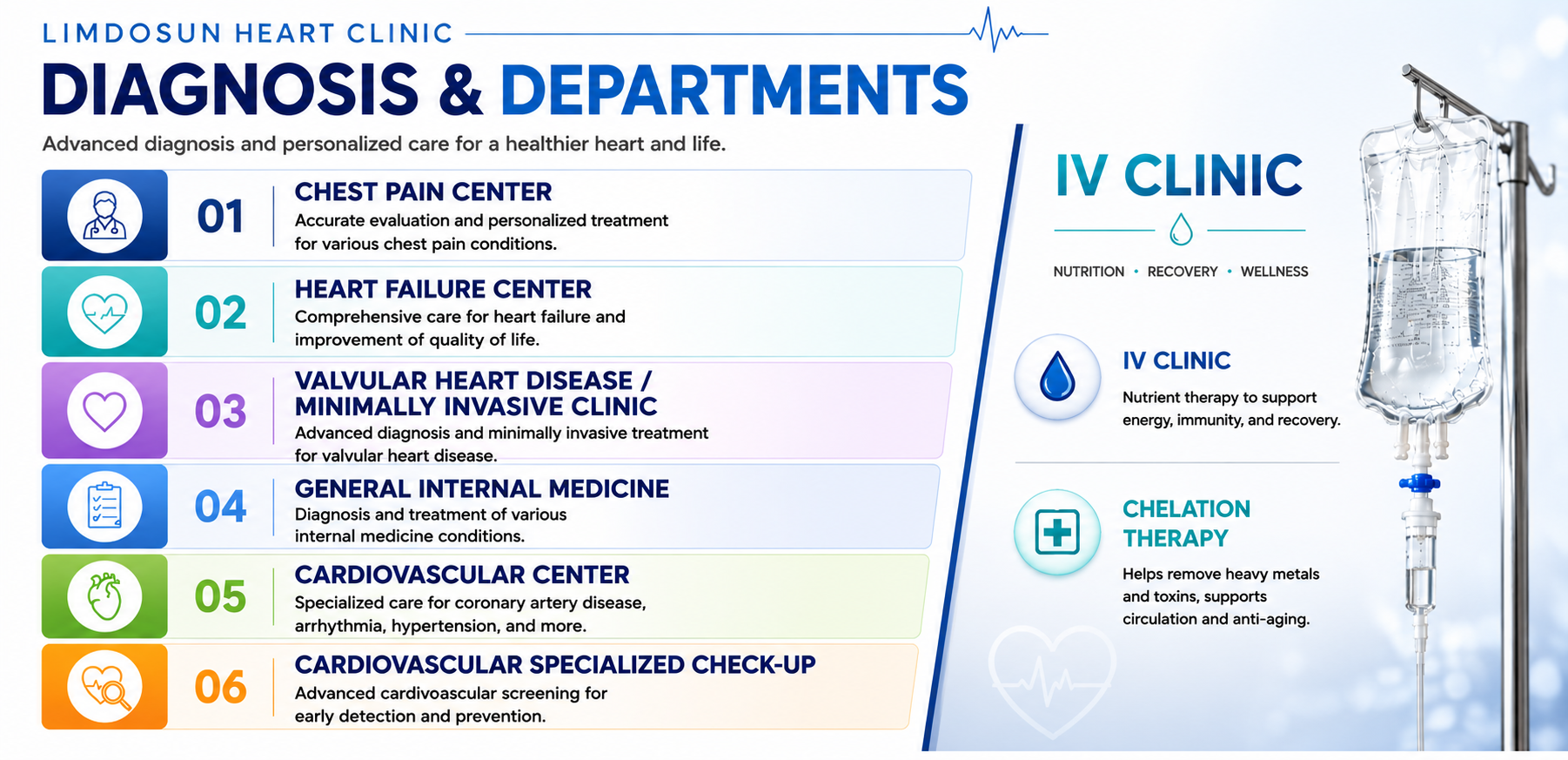
Dr. Lim Do-Sun Cardiovascular Clinic provides personalized stroke risk assessment, heart screening,
and preventive cardiovascular care for international patients in Seoul.
What Increases Stroke Risk?
Major risk factors include hypertension, irregular heartbeat, diabetes, high cholesterol, obesity, smoking, vascular disease, and a previous transient ischemic attack.
Stroke Prevention Evaluation
Evaluation may include blood pressure checks, blood tests, electrocardiography, echocardiography, carotid artery ultrasound, and additional cardiovascular testing when needed.
Personalized Prevention
Prevention may involve controlling blood pressure, cholesterol, and blood sugar, managing atrial fibrillation, reviewing medications, stopping smoking, exercising, and maintaining a healthy weight.
Who Should Consider Screening?
Screening may be helpful for patients with cardiovascular risk factors, irregular heartbeat, dizziness, previous TIA, carotid artery disease, or a family history of stroke.
International Patient Care
The clinic welcomes expatriates, travelers, and international residents seeking stroke prevention and cardiovascular screening in Seoul.
Why Choose Dr. Lim Do-Sun Heart Clinic?
- Cardiologist-led stroke risk evaluation
- Heart and vascular screening
- Blood pressure and cholesterol management
- Atrial fibrillation assessment
- International patient support
Book a Stroke Prevention Consultation
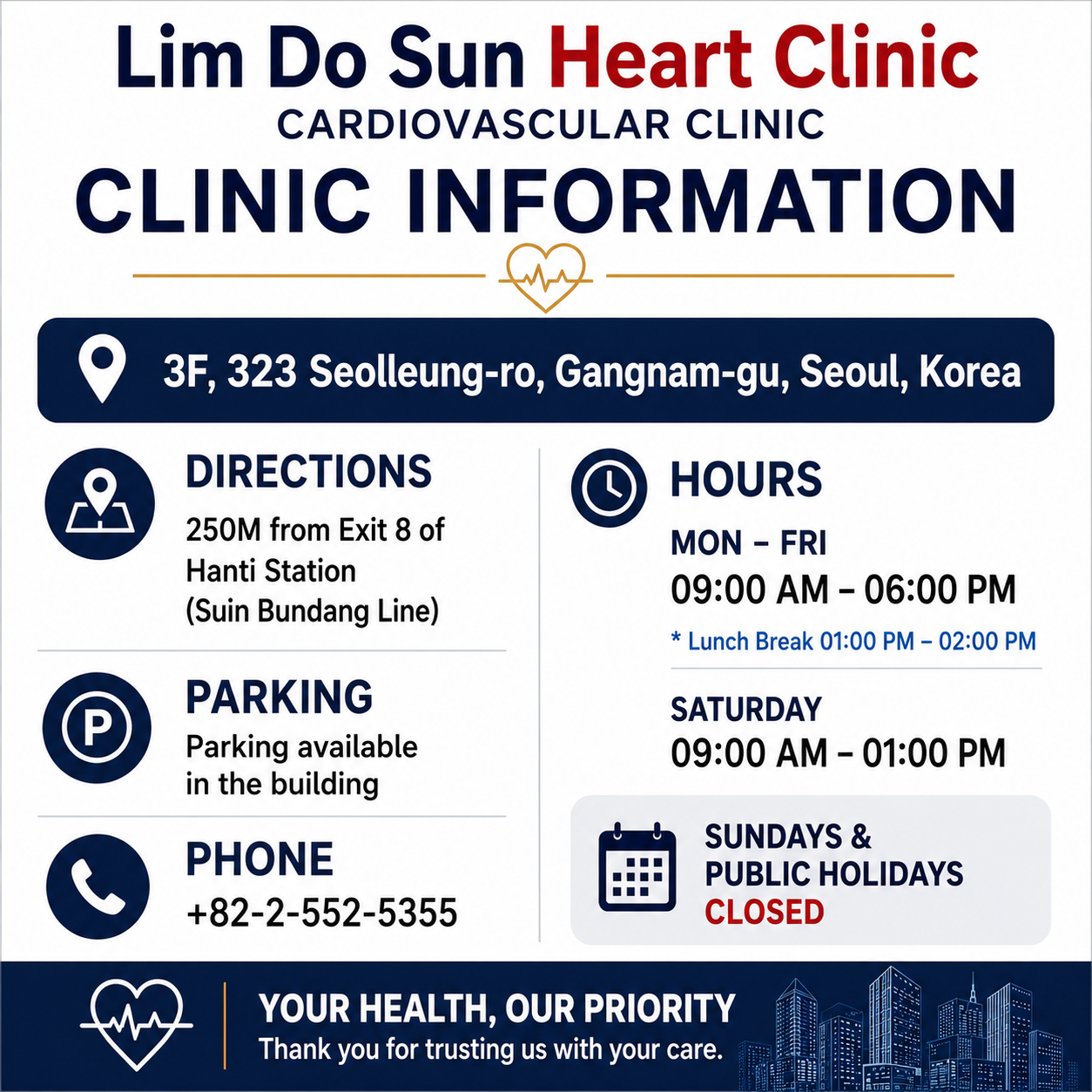
Visit Dr. Lim Do-Sun Cardiovascular Clinic for personalized stroke risk assessment and preventive heart care in Seoul.
Frequently Asked Questions
Can strokes be prevented?
Many strokes may be prevented by managing blood pressure, cholesterol, diabetes, smoking, and abnormal heart rhythms.
How is atrial fibrillation related to stroke?
Atrial fibrillation can allow blood clots to form in the heart and travel to the brain.
What tests help assess stroke risk?
Tests may include an ECG, echocardiogram, blood tests, and carotid artery ultrasound.
Who is at high risk of stroke?
Risk is higher in patients with hypertension, diabetes, high cholesterol, atrial fibrillation, smoking history, or previous TIA.
Can international patients receive preventive care?
Yes. International patients can receive cardiovascular screening, risk assessment, and ongoing preventive management in Seoul.