Angina Treatment in Seoul, Korea |
Chest Pain and Heart Blood Flow Evaluation |
Dr. Lim Do-Sun Heart Clinic
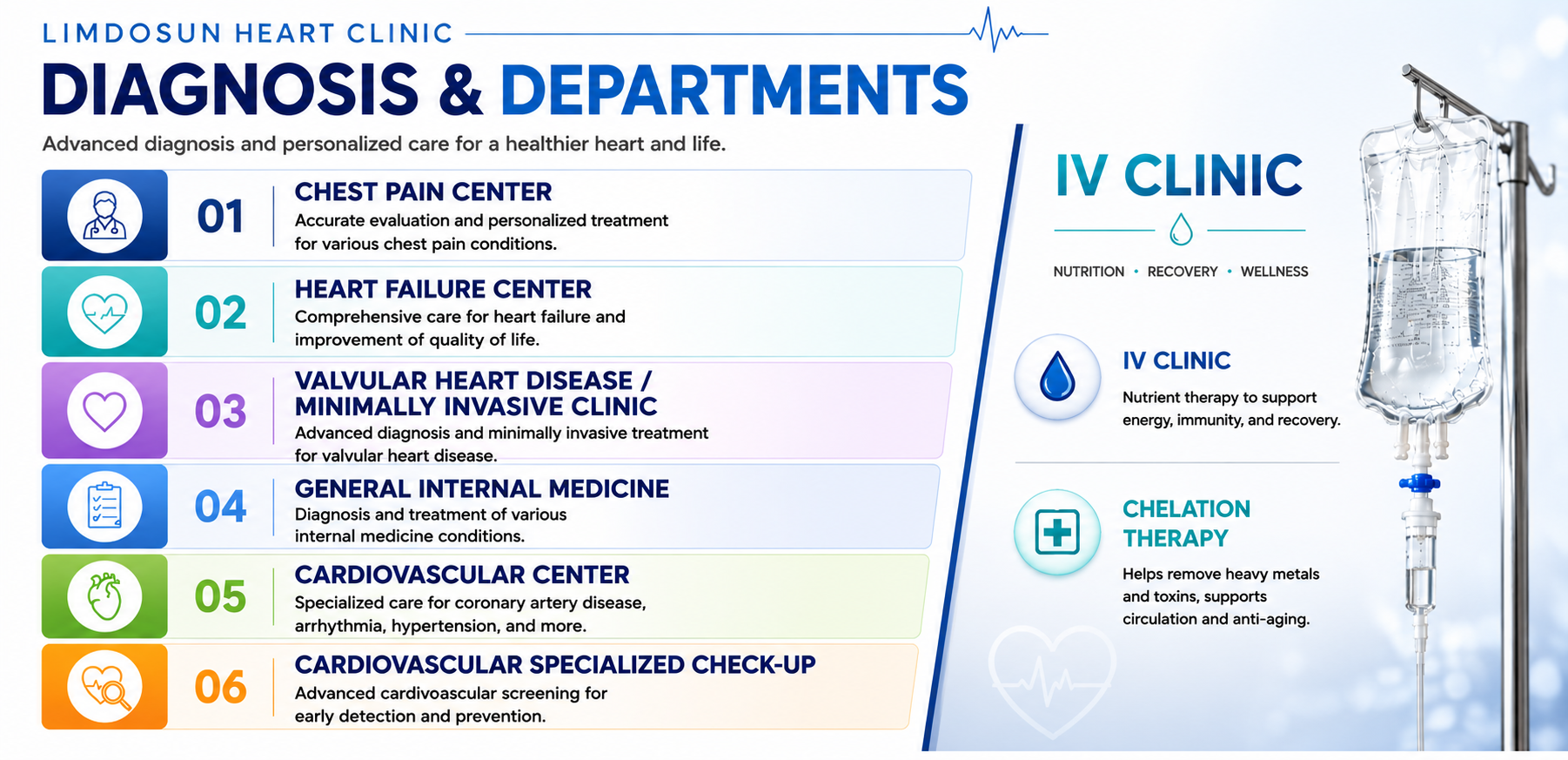
Angina pectoris is chest pain or pressure caused by reduced blood flow to the heart muscle. Symptoms often appear during exercise, emotional stress, or cold weather and may improve with rest. Dr. Lim Do-Sun Cardiovascular Clinic in Seoul provides cardiologist-led evaluation, diagnostic testing, and personalized treatment for suspected angina.
What Is Angina Pectoris?
Angina is not a disease itself. It is a symptom that commonly develops when narrowed coronary arteries cannot supply enough oxygen-rich blood to the heart.
Angina may feel like pressure, squeezing, tightness, heaviness, or burning in the chest.
Common Angina Symptoms
Symptoms may include:
- Chest pressure or tightness
- Pain during exercise or stress
- Shortness of breath
- Discomfort spreading to the arm, shoulder, neck, jaw, or back
- Fatigue or reduced stamina
- Sweating, nausea, or dizziness
Some patients may experience indigestion-like discomfort rather than typical chest pain.
Stable vs. Unstable Angina
Stable angina usually occurs during activity and improves with rest or medication.
Unstable angina may occur unexpectedly, at rest, or become more frequent and severe. It can indicate an urgent reduction in heart blood flow and requires immediate medical attention.
What Causes Angina?
The most common cause is coronary artery disease, in which plaque narrows the arteries supplying the heart.
Risk factors include:
- High cholesterol
- High blood pressure
- Diabetes
- Smoking
- Obesity
- Physical inactivity
- Family history of heart disease
- Older age
How Is Angina Diagnosed?
Dr. Lim Do-Sun may review your symptoms, medical history, medications, blood pressure, and cardiovascular risk factors.
Recommended tests may include:
- Electrocardiogram
- Echocardiogram
- Exercise stress test
- Blood tests
- Holter monitoring
- Coronary CT or advanced cardiac imaging
Further coronary testing may be recommended when significant artery narrowing is suspected.
Angina Treatment
Treatment depends on the cause, symptom severity, and degree of coronary artery narrowing.
Management may include:
- Medication to improve heart blood flow
- Cholesterol-lowering medication
- Blood pressure and diabetes control
- Antiplatelet medication when appropriate
- Smoking cessation
- Weight management
- Heart-healthy diet and exercise
- Referral for coronary stenting or bypass surgery when required
When Is Angina an Emergency?
Seek emergency care when chest pain:
- Occurs at rest
- Lasts longer than several minutes
- Becomes more severe or frequent
- Does not improve with rest
- Occurs with sweating, nausea, fainting, or breathing difficulty
- Spreads to the arm, neck, jaw, or back
These symptoms may indicate unstable angina or a heart attack.
Angina Care for International Patients
Dr. Lim Do-Sun Cardiovascular Clinic welcomes international patients, expatriates, and visitors seeking chest pain or angina evaluation in Seoul.
Patients may bring previous ECGs, coronary imaging, blood test results, medication lists, and cardiology records.
Why Choose Dr. Lim Do-Sun Heart Clinic?
The clinic provides:
- Cardiologist-led chest pain evaluation
- Angina and coronary risk assessment
- ECG and echocardiography
- Exercise-related symptom testing
- Personalized treatment planning
- Cardiovascular risk management
- International patient support
Book an Angina Evaluation in Seoul
Chest pressure during activity should not be ignored. Early diagnosis can identify reduced heart blood flow and help prevent serious cardiovascular complications.
Visit Dr. Lim Do-Sun Cardiovascular Clinic for professional angina evaluation and heart care in Seoul, Korea.
Frequently Asked Questions
What does angina feel like?
Angina may feel like pressure, squeezing, heaviness, tightness, burning, or discomfort in the chest.
Is angina the same as a heart attack?
No. Angina is caused by temporarily reduced blood flow, while a heart attack occurs when blood flow is blocked long enough to damage the heart muscle.
Can angina occur without severe chest pain?
Yes. Some patients experience shortness of breath, fatigue, nausea, or discomfort in the jaw, back, or arm.
What triggers stable angina?
Common triggers include exercise, emotional stress, cold weather, and heavy meals.
Can angina be treated with medication?
Yes. Many patients are treated with medication and cardiovascular risk management, although severe artery narrowing may require a procedure.
Should chest pain at rest be treated as an emergency?
Yes. New, severe, or worsening chest pain at rest may indicate unstable angina or a heart attack and requires emergency assessment.