Coronary Artery Disease in Seoul, Korea |
Heart Artery Diagnosis and Treatment |
Dr. Lim Do-Sun Heart Clinic
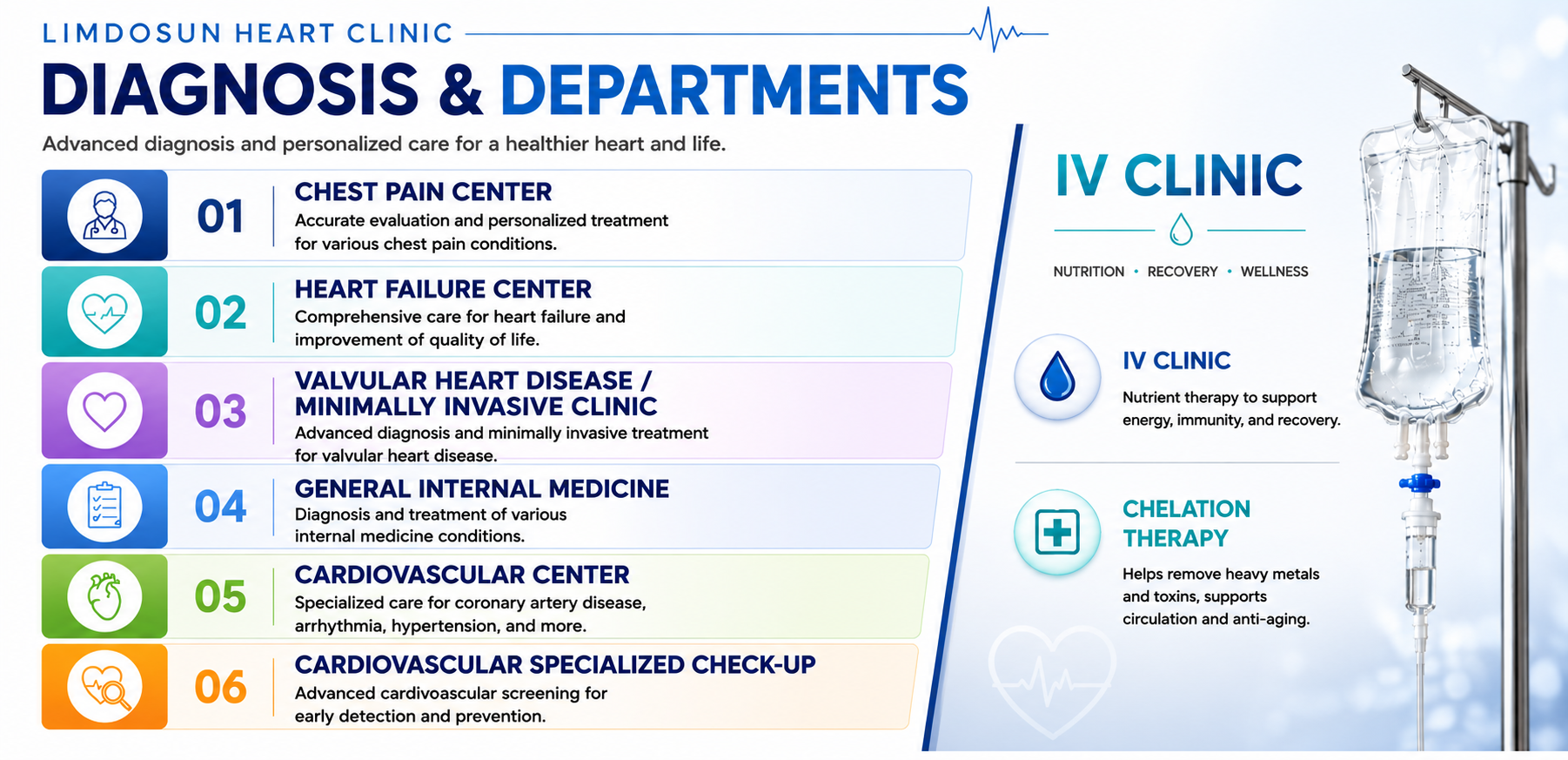
Coronary artery disease occurs when plaque narrows the blood vessels supplying the heart. It can cause chest pressure, shortness of breath, fatigue, or reduced exercise capacity, although early disease may have no symptoms. Dr. Lim Do-Sun Cardiovascular Clinic in Seoul provides cardiologist-led testing, risk assessment, and personalized coronary artery disease management.
What Is Coronary Artery Disease?
Coronary artery disease, also called coronary heart disease, develops when cholesterol and fatty deposits build up inside the coronary arteries. Reduced blood flow can cause angina, while a sudden artery blockage may lead to a heart attack.
Common Symptoms
Symptoms may include:
- Chest pressure, pain, or tightness
- Shortness of breath
- Fatigue during physical activity
- Reduced exercise tolerance
- Pain spreading to the arm, jaw, neck, or back
- Sweating, nausea, or dizziness
Some patients, especially those with diabetes, may have silent coronary artery disease without typical chest pain.
Coronary Artery Disease Risk Factors
Common risk factors include:
- High cholesterol
- High blood pressure
- Diabetes
- Smoking
- Obesity
- Physical inactivity
- Family history of heart disease
- Chronic kidney disease
- Older age
Patients with several risk factors may benefit from cardiovascular screening even without obvious symptoms.
How Is Coronary Artery Disease Diagnosed?
Dr. Lim Do-Sun may evaluate your symptoms, medical history, blood pressure, cholesterol, medications, and family history.
Recommended tests may include:
- Electrocardiogram
- Echocardiogram
- Exercise stress test
- Blood tests
- Holter monitoring
- Coronary CT or advanced cardiac imaging
The appropriate tests depend on your symptoms and overall cardiovascular risk.
Treatment and Prevention
Treatment may include cholesterol medication, blood pressure control, diabetes management, antiplatelet medication, and medicine for chest pain.
Lifestyle recommendations may include regular exercise, weight management, smoking cessation, and a heart-healthy diet. Patients with significant artery narrowing may require referral for coronary angiography, stenting, or bypass surgery.
When Is Chest Pain an Emergency?
Seek emergency care for severe or persistent chest pain, especially when it occurs with:
- Shortness of breath
- Cold sweating
- Nausea
- Fainting
- Pain spreading to the arm, back, neck, or jaw
These symptoms may indicate a heart attack.
Coronary Artery Disease Care for International Patients
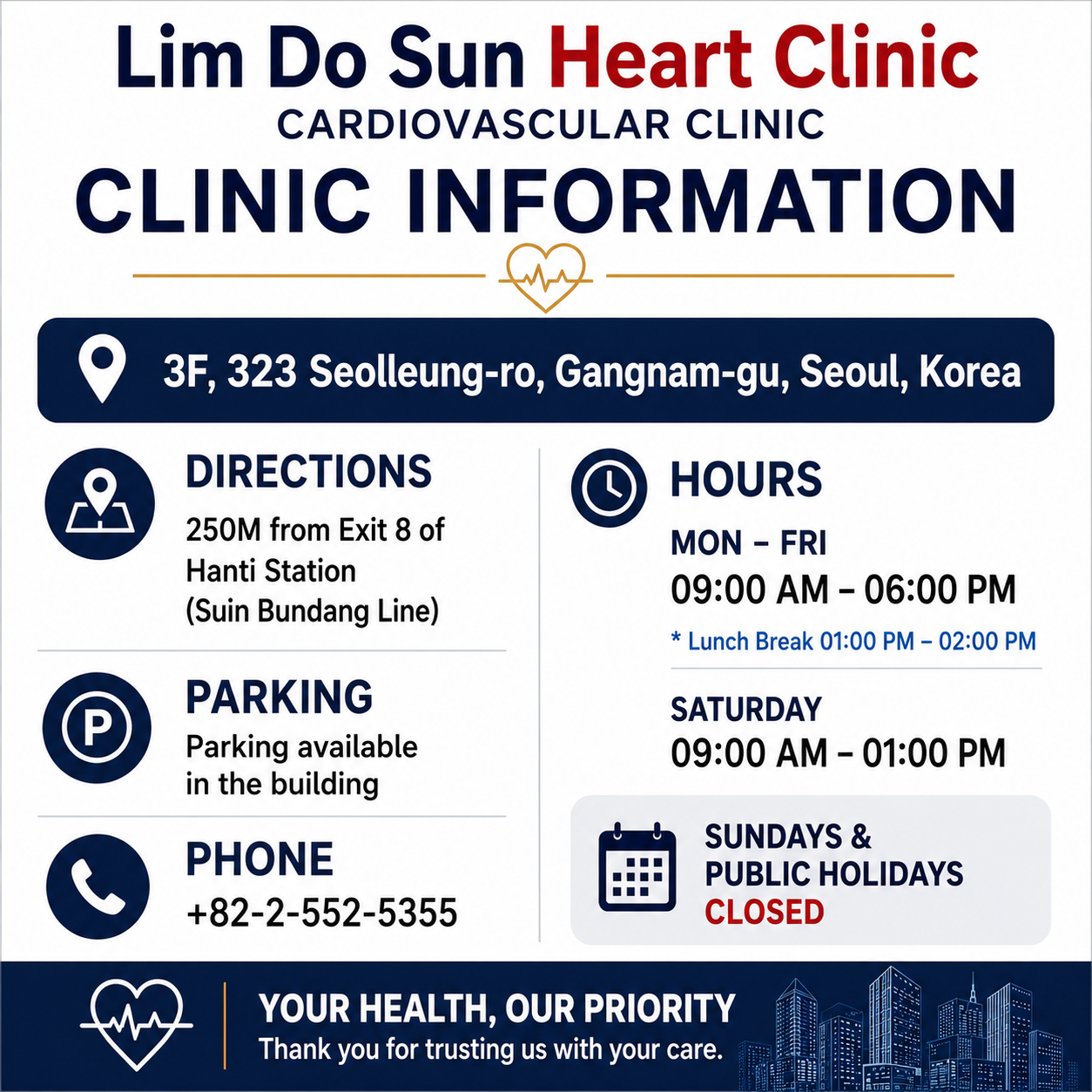
Dr. Lim Do-Sun Cardiovascular Clinic welcomes international patients, expatriates, and visitors seeking coronary artery disease evaluation in Seoul.
Patients are encouraged to bring previous ECGs, coronary imaging, blood test results, medication lists, and cardiology reports.
Why Choose Dr. Lim Do-Sun Heart Clinic?
The clinic provides:
- Cardiologist-led consultations
- Coronary artery disease risk assessment
- ECG and echocardiography
- Exercise-related symptom evaluation
- Personalized treatment planning
- Long-term cardiovascular monitoring
- International patient support
Book a Coronary Artery Disease Evaluation in Seoul
Early detection and proper management can help slow coronary artery disease and reduce the risk of heart attack.
Visit Dr. Lim Do-Sun Cardiovascular Clinic for professional coronary artery disease testing and cardiovascular care in Seoul, Korea.
Frequently Asked Questions
What is the most common symptom of coronary artery disease?
Chest pressure or tightness during physical activity is common, but some patients experience shortness of breath or fatigue instead.
Can coronary artery disease occur without symptoms?
Yes. Early coronary artery disease may cause no noticeable symptoms.
What tests check for blocked heart arteries?
Testing may include an ECG, stress test, echocardiogram, coronary CT, or coronary angiography.
Can coronary artery disease be treated without surgery?
Many patients are managed with medication, lifestyle changes, and control of cholesterol, blood pressure, and diabetes.
What is the difference between coronary artery disease and a heart attack?
Coronary artery disease is the narrowing of the heart arteries. A heart attack occurs when blood flow becomes suddenly blocked and damages the heart muscle.
Who should receive coronary artery disease screening?
Screening may be recommended for people with chest symptoms, diabetes, high cholesterol, hypertension, smoking history, or a strong family history of heart disease.