Do I Need an Echocardiogram for High Blood Pressure?
Do I Need an Echocardiogram for High Blood Pressure?
An echocardiogram can show whether long-term high blood pressure has affected your heart’s structure or pumping function. However, not everyone with hypertension needs this test immediately.
The decision usually depends on how long your blood pressure has been high, whether it is controlled, and whether you have symptoms or abnormal initial results.
🫀 What Does an Echocardiogram Check?
An echocardiogram, or heart ultrasound, uses sound waves to examine:
- Heart size and shape
- Heart muscle thickness
- Pumping strength
- Heart valve function
- Possible structural abnormalities
The examination is painless and does not use radiation.
🩺 Is It Necessary for Every Patient?
An echocardiogram is not usually part of the basic assessment for every newly diagnosed patient.
Initial hypertension testing commonly includes:
- Repeated or home blood pressure measurements
- Blood and urine tests
- Kidney function and cholesterol checks
- Blood glucose testing
- A resting electrocardiogram (ECG)
- An eye examination when appropriate
These tests help identify cardiovascular risks and possible organ damage before advanced imaging is considered.
⚠️ When Might an Echocardiogram Be Recommended?
Your doctor may recommend one when you have:
- Long-term or poorly controlled hypertension
- Shortness of breath or reduced exercise ability
- Swelling in the feet or ankles
- Chest discomfort
- A heart murmur
- An abnormal ECG
- Suspected heart enlargement or heart failure
- Several major cardiovascular risk factors
The test can help determine whether high blood pressure has caused structural changes that may influence your treatment plan.
💓 Can a Normal ECG Replace an Echocardiogram?
No. The two tests provide different information.
An ECG records the heart’s electrical activity, while an echocardiogram examines its physical structure and function. A normal ECG can be reassuring, but it does not directly show heart muscle thickness, valve function, or pumping strength.
Your doctor will decide whether additional imaging is necessary based on your symptoms and overall cardiovascular risk.
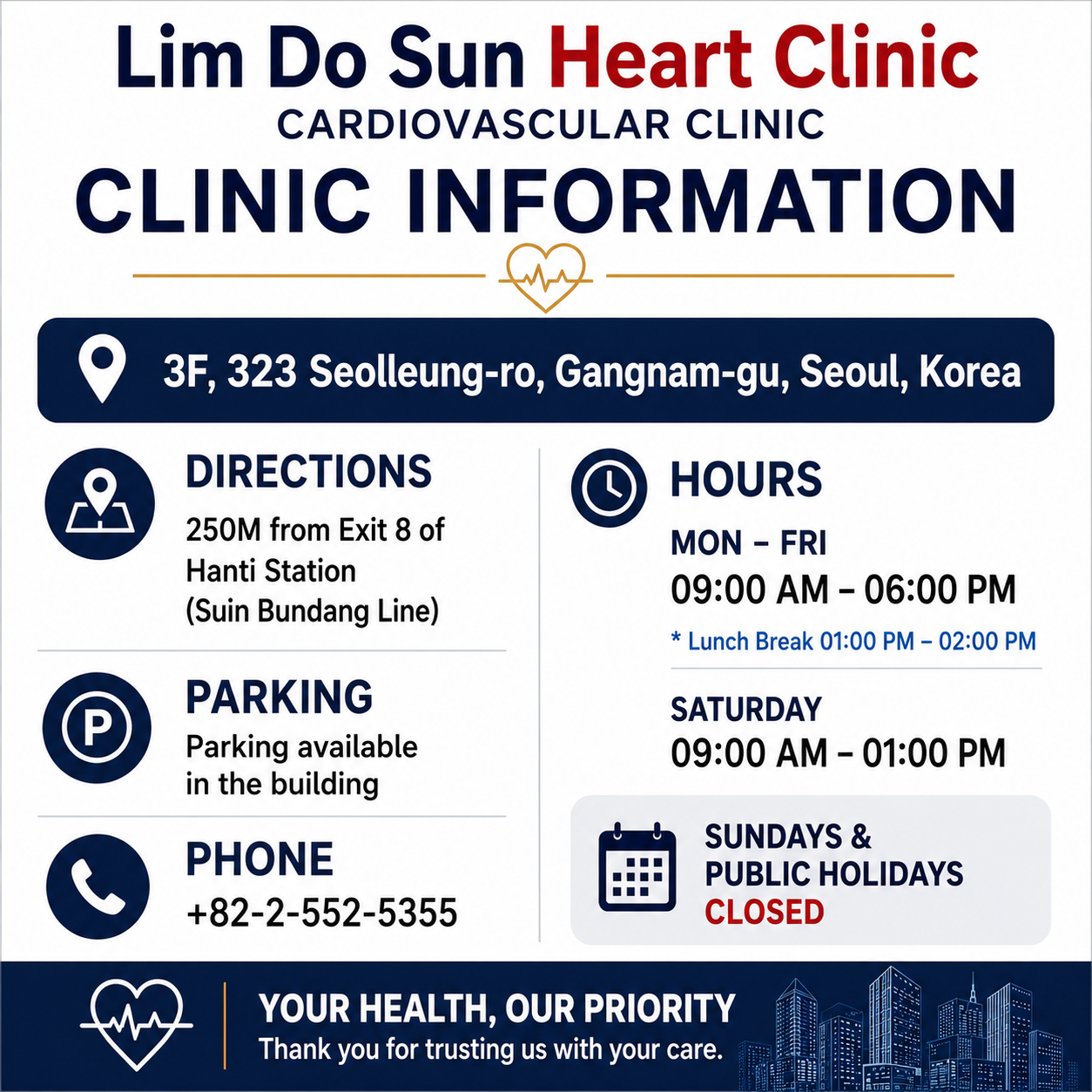
🏥 Getting Tested in Seoul
Foreign patients can usually begin at an internal medicine clinic for blood pressure confirmation, laboratory testing, and an ECG.
A cardiology consultation may be more appropriate when:
- Blood pressure remains high despite treatment
- You have chest pain, breathlessness, or swelling
- Your ECG or physical examination is abnormal
- Structural heart disease is suspected
Before booking, confirm whether the clinic offers English-language support, whether fasting is required, and whether the echocardiogram has a separate cost.
🚑 When High Blood Pressure Is an Emergency
If your blood pressure is above 180/120 mmHg, rest briefly and measure it again.
Call 119 in Seoul immediately if the high reading is accompanied by:
- Chest pain
- Severe shortness of breath
- Sudden weakness or numbness
- Vision changes
- Difficulty speaking
- Loss of consciousness
These symptoms may indicate acute organ damage and require emergency care.
✨ Final Thoughts
You may not need an echocardiogram simply because your blood pressure is elevated. Basic testing and reliable home measurements are often the first steps.
However, an echocardiogram can be valuable when hypertension is long-standing, difficult to control, associated with symptoms, or accompanied by abnormal examination results. Your doctor can determine whether the test would provide useful information for your individual treatment plan.