Echocardiogram vs ECG Explained
Echocardiogram vs ECG Explained
An ECG (electrocardiogram) and an echocardiogram are both common heart tests, but they examine very different aspects of heart health.
An ECG records the heart’s electrical activity, while an echocardiogram uses ultrasound to create moving images of the heart’s structure and function.
💓 What Does an ECG Show?
An ECG is a quick test that records the electrical signals controlling your heartbeat.
It can help identify:
- Fast or slow heart rhythms
- Atrial fibrillation
- Electrical conduction problems
- Certain signs of heart-muscle injury
- Abnormal heartbeat patterns
Because a standard ECG records only a short period, intermittent rhythm problems may require longer monitoring with a Holter or event monitor.
🫀 What Does an Echocardiogram Show?
An echocardiogram, or heart ultrasound, uses sound waves to create moving pictures of the heart.
It can assess:
- Heart size and shape
- Pumping function
- Heart valves
- Heart-wall movement
- Structural abnormalities
- Certain problems affecting blood flow
Unlike an ECG, it allows doctors to actually see how the heart chambers and valves are moving.
🩺 Which Test Is Better for Palpitations?
For palpitations or an irregular heartbeat, an ECG is usually more directly useful because it records electrical rhythm.
An ECG may be appropriate for:
- Racing heartbeat
- Irregular pulse
- Skipped beats
- Dizziness
- Fainting
An echocardiogram may be added when the doctor also wants to check whether structural heart disease could be contributing to the rhythm problem.
❤️ When Is an Echocardiogram More Useful?
A heart ultrasound may be more appropriate when you have:
- A heart murmur
- Shortness of breath
- Leg swelling
- Suspected heart failure
- Known valve disease
- Abnormal heart structure suspected on examination
It is particularly useful for evaluating heart pumping function and valve problems.
🔍 Do You Sometimes Need Both?
Yes. ECG and echocardiography often provide complementary information.
For example, someone with an abnormal rhythm may have:
- An ECG to identify the electrical problem
- An echocardiogram to check whether the heart chambers, valves, or pumping function are abnormal
Using both can therefore provide a more complete picture when a cardiovascular problem is suspected.
🏥 Getting ECG and Echocardiography in Seoul
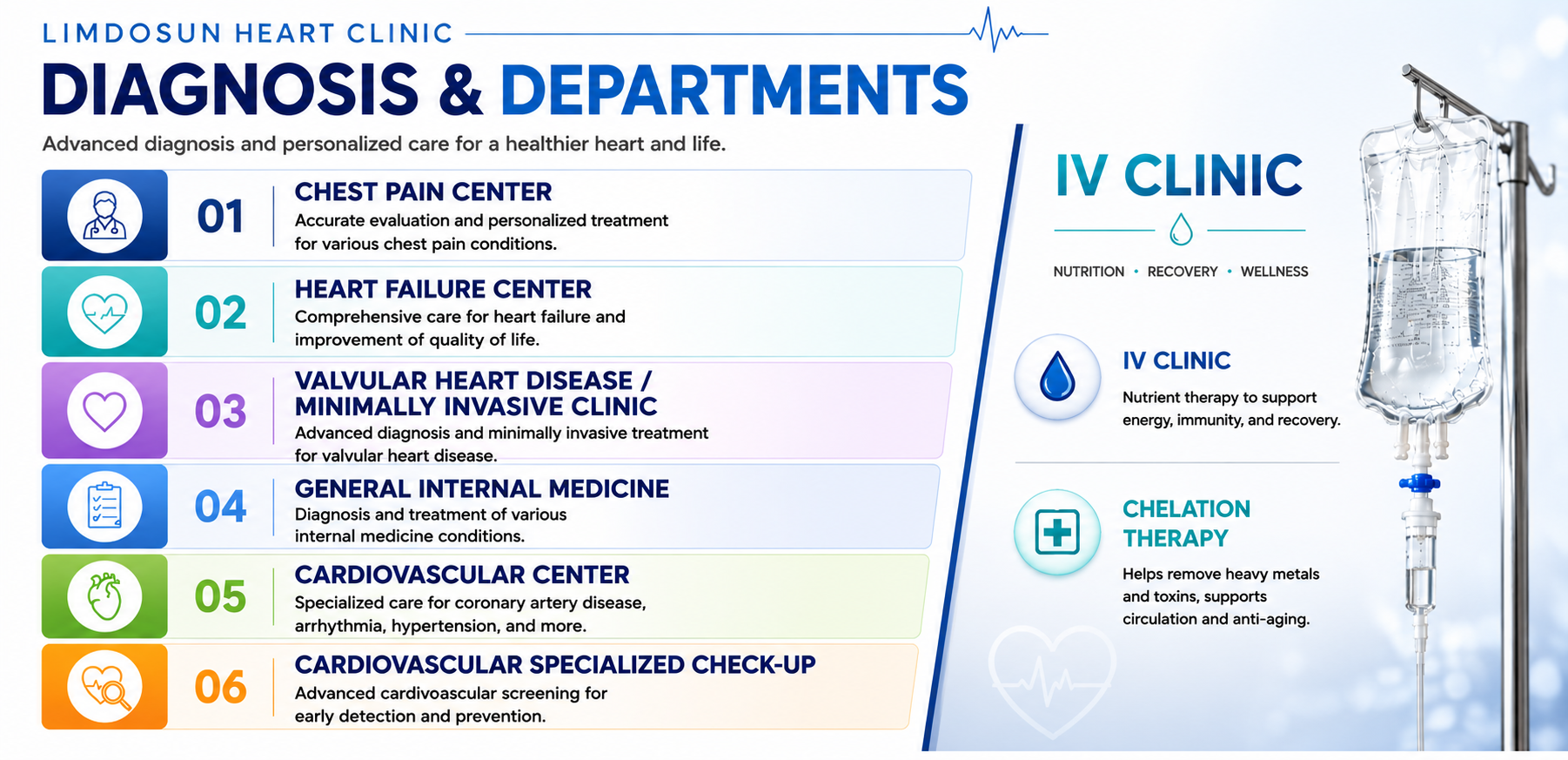
An internal medicine or cardiology clinic can determine which test is appropriate based on your symptoms and medical history.
Bring:
- Details about your symptoms
- Previous ECG or ultrasound reports
- Your medication list
- Home blood-pressure records
- Information about diabetes or cholesterol
- Family history of heart disease
Confirm whether English-language support and same-day ECG or echocardiography are available.
🚑 When Testing Should Be Urgent
Do not wait for a routine echocardiogram or outpatient ECG if you have severe or persistent chest pressure, major breathing difficulty, fainting, or loss of consciousness.
When a heart attack is suspected, an ECG is one of the initial hospital tests, together with other emergency assessments such as cardiac blood tests.
✨ Final Thoughts
An ECG evaluates the heart’s electrical system, while an echocardiogram evaluates its structure and pumping function.
For palpitations and rhythm problems, ECG is usually more directly informative. For valve disease, heart failure, murmurs, or structural concerns, echocardiography provides more useful information.
Sometimes the best evaluation uses both tests together, depending on your symptoms and initial findings.