Executive Heart Screening in Seoul
Executive Heart Screening in Seoul
Busy executives and professionals often prioritize work schedules over preventive healthcare. However, high blood pressure, high cholesterol, diabetes, and other cardiovascular risks can develop without obvious symptoms.
A useful executive heart screening should focus on identifying your actual cardiovascular risk rather than simply ordering the largest possible package of tests.
💼 Who Should Consider Heart Screening?
Cardiovascular assessment becomes particularly useful when you have:
- High blood pressure
- High LDL cholesterol
- Diabetes or prediabetes
- Smoking history
- Kidney disease
- Excess weight
- Limited physical activity
- Family history of early heart disease
Age, medical history, medications, sleep, exercise habits, and previous test results should also be reviewed when estimating overall cardiovascular risk.
🩺 What Should a Basic Screening Include?
A practical cardiovascular checkup may begin with:
- Blood pressure
- Heart rate
- Cholesterol profile
- Blood glucose or HbA1c
- Weight and waist assessment
- Kidney-function testing when appropriate
- Smoking and lifestyle review
- Family history
These basic measurements often provide more useful preventive information than advanced imaging performed without a clear indication.
💓 Do Executives Need an ECG Every Year?
Not necessarily.
An ECG can be valuable when you have palpitations, fainting, an abnormal heartbeat, known cardiovascular disease, or other concerning findings.
However, routine resting or exercise ECG screening is not recommended for asymptomatic adults at low cardiovascular risk simply to predict future cardiovascular events.
This is why executive screening should be individualized rather than automatically including every cardiac test each year.
🫀 What About Echocardiography and Stress Testing?
Additional heart testing may be considered when symptoms or initial findings suggest a specific problem.
Examples include:
- Echocardiogram: Suspected valve or structural heart disease
- Holter monitor: Intermittent palpitations
- Exercise testing: Selected exertional symptoms
- Additional cardiac imaging: When coronary disease requires further evaluation
Someone with chest pressure during exercise needs a different evaluation from an asymptomatic person simply seeking preventive screening.
🩻 Is a Coronary Calcium Scan Useful?
A coronary artery calcium (CAC) scan can sometimes help clarify cardiovascular risk when the decision about preventive treatment remains uncertain.
CAC scoring is generally used selectively, particularly in people whose traditional risk assessment leaves uncertainty about how aggressively cholesterol or other risk factors should be treated. It is not intended as a routine scan for every executive.
📋 Prepare for an Efficient Executive Checkup
If your schedule is limited, prepare information before your appointment.
Bring:
- Previous health-screening reports
- Recent blood-pressure readings
- Cholesterol and glucose results
- Medication and supplement list
- Previous ECG or cardiac imaging
- Family history of early cardiovascular disease
- Notes about chest discomfort, palpitations, breathlessness, or dizziness
This can help the doctor avoid unnecessary duplicate tests and focus on areas that actually need further evaluation.
🏥 Getting Executive Heart Screening in Seoul
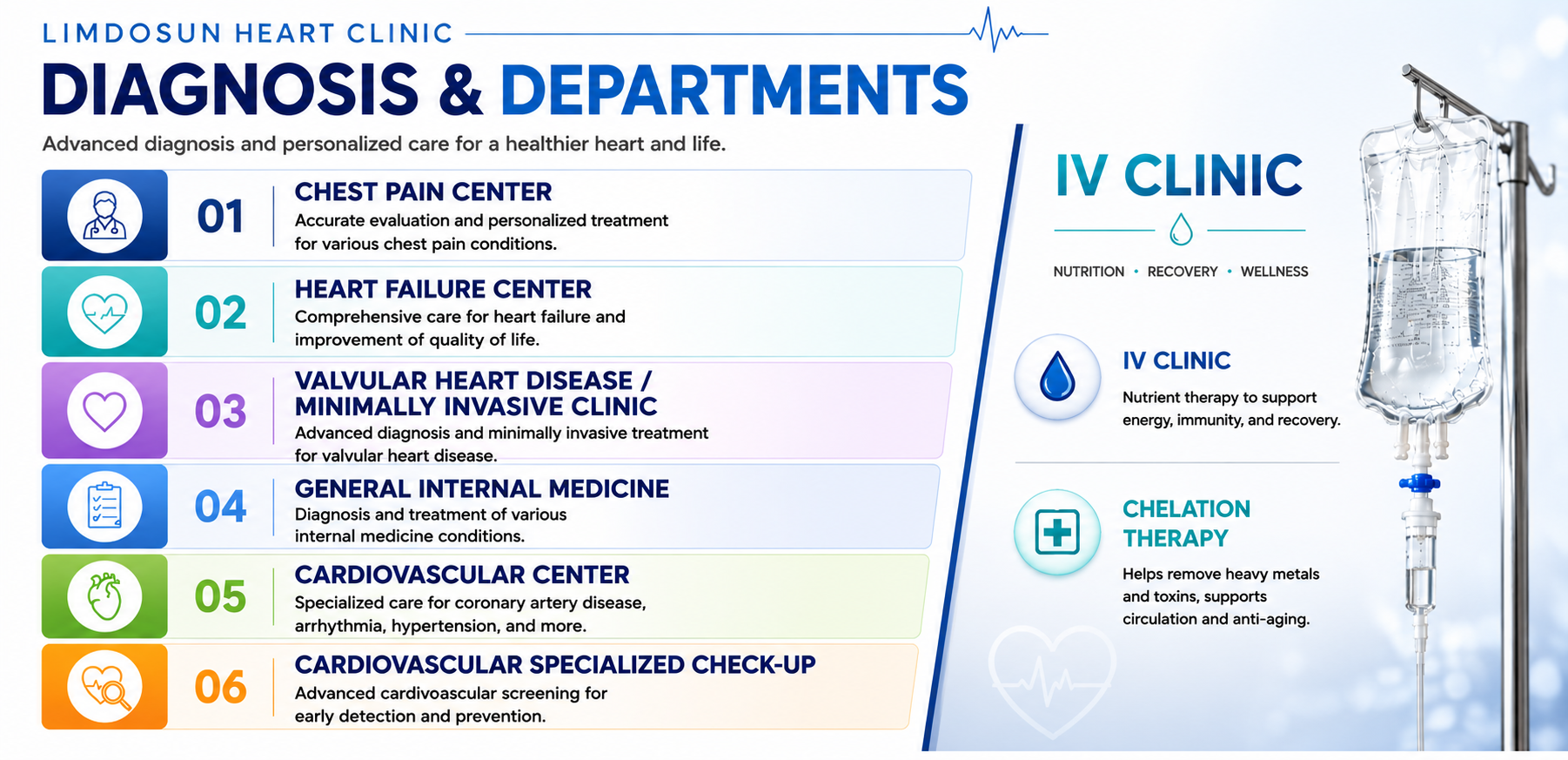
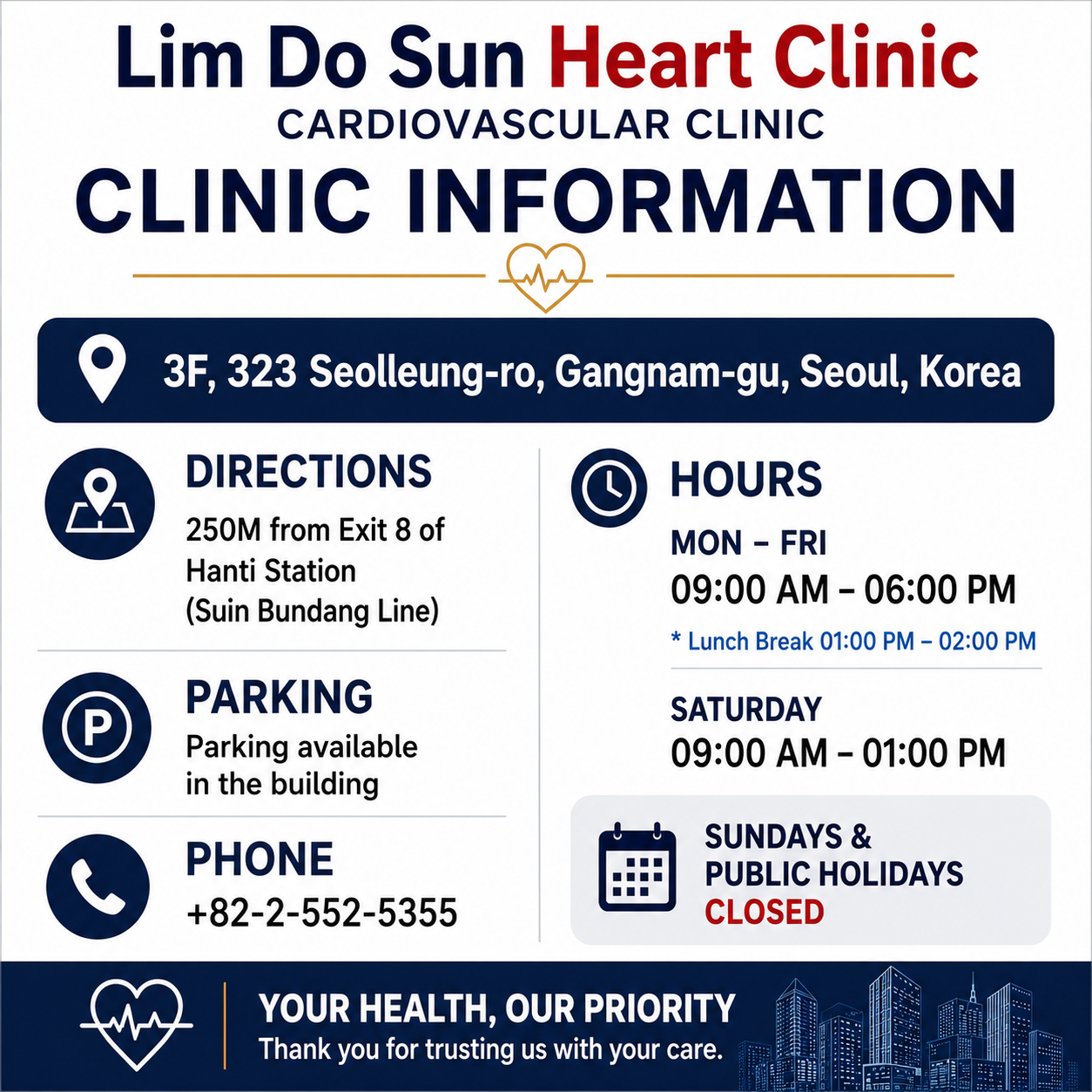
An internal medicine or cardiology clinic can provide cardiovascular risk assessment and determine whether additional testing is appropriate.
Before booking, confirm:
- English-language consultation
- Same-day blood testing
- ECG availability
- Echocardiography or rhythm monitoring if required
- Appointment duration
- Insurance coverage and self-pay costs
Foreign residents enrolled in Korea’s National Health Insurance receive the same general benefit coverage framework as Korean citizens.
🚑 Screening Is Not for Emergency Symptoms
Routine executive screening is not appropriate when you are currently experiencing:
- Severe or persistent chest pressure
- Major breathing difficulty
- Fainting or collapse
- Sudden severe weakness
- Loss of consciousness
These symptoms require urgent medical assessment. In Seoul, 119 provides emergency medical response, with interpretation assistance available for foreign callers.
✨ Final Thoughts
The best executive heart screening is not necessarily the one with the most tests.
A more effective approach starts with blood pressure, cholesterol, blood sugar, family history, lifestyle, and cardiovascular symptoms, followed by ECG, echocardiography, rhythm monitoring, stress testing, or coronary imaging only when clinically appropriate.
For busy professionals in Seoul, an individualized screening plan can provide useful preventive information while minimizing unnecessary testing.