High Blood Pressure Without Symptoms
High Blood Pressure Without Symptoms
High blood pressure often causes no noticeable symptoms. Feeling healthy does not mean your blood pressure is normal or that treatment is unnecessary.
Regular measurement is the only reliable way to detect hypertension. Without control, it can gradually damage the heart, brain, kidneys, eyes, and blood vessels.
🩺 Why You May Feel Completely Normal
Hypertension usually develops slowly, allowing the body to adapt without producing obvious warning signs.
Headaches, fatigue, or dizziness are not reliable indicators. Some people have dangerously high readings while feeling well, while similar symptoms can occur for unrelated reasons.
❤️ What Can Happen Without Treatment?
Persistent high blood pressure places extra strain on arteries and organs.
Over time, it may increase the risk of:
- Heart attack
- Stroke
- Heart failure
- Kidney disease
- Vision problems
- Vascular or cognitive decline
Controlling blood pressure can prevent or delay many of these complications.
🏠 How Should High Blood Pressure Be Confirmed?
One elevated reading does not always establish a diagnosis. Blood pressure may temporarily rise because of stress, caffeine, exercise, pain, or anxiety during a clinic visit.
Your doctor may use:
- Repeated clinic measurements
- Home blood-pressure records
- 24-hour ambulatory monitoring
- Comparison of morning and evening readings
Home monitoring can also help identify white coat hypertension and show whether treatment is working.
🧪 What Else Should Be Checked?
A hypertension evaluation may include:
- Cholesterol and blood sugar
- Kidney function and electrolytes
- Urine protein or albumin
- Medication and supplement review
- Weight, sleep, smoking, and alcohol assessment
- ECG when medically appropriate
Additional heart or kidney tests are usually selected according to your risk factors, examination, and initial results.
💊 Should You Take Medication Without Symptoms?
Yes, when medication is prescribed based on your readings and cardiovascular risk.
Do not stop treatment simply because you feel well or your blood pressure improves. Lower readings may mean the medication is working—not that hypertension has disappeared.
Lifestyle management may also include:
- Reducing sodium
- Exercising regularly
- Maintaining a healthy weight
- Limiting excessive alcohol
- Avoiding smoking
- Treating sleep apnea
- Taking medication consistently
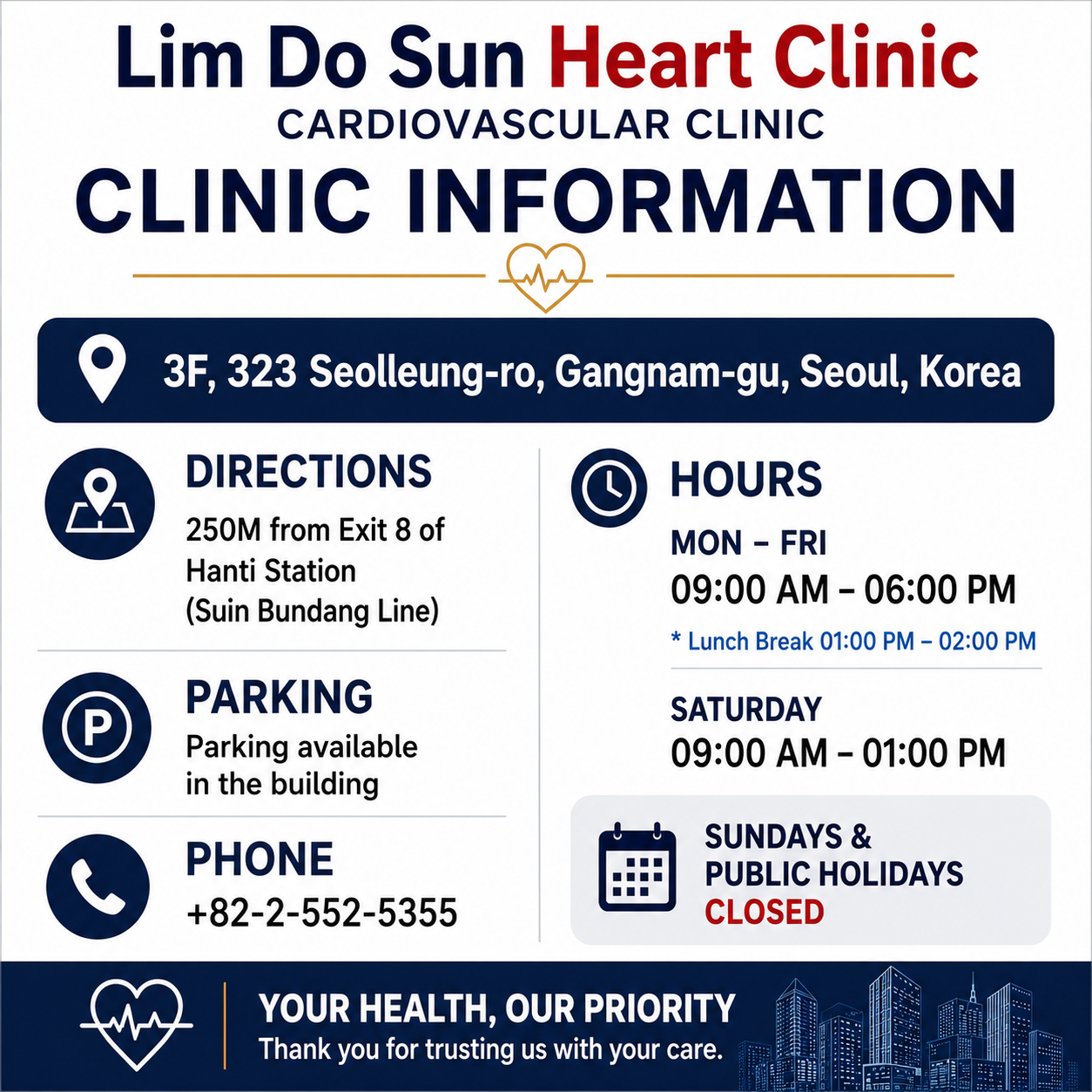
🏥 Getting Checked in Seoul
An internal medicine clinic is a practical starting point for confirming hypertension, reviewing home readings, and arranging blood or urine tests.
Bring:
- Your home blood-pressure monitor
- Several days of recorded readings
- Your medication and supplement list
- Previous health-screening results
- Notes about snoring, sleep, or medication side effects
Eligible NHIS members may receive general health screening that includes blood-pressure assessment, with follow-up testing available when hypertension is suspected.
🚑 When Is High Blood Pressure an Emergency?
If your reading is above 180/120 mmHg, rest briefly and measure again.
Call 119 in Seoul immediately when a repeated very high reading occurs with:
- Chest pain
- Severe shortness of breath
- Sudden weakness or numbness
- Vision changes
- Difficulty speaking
- Confusion or loss of consciousness
A very high reading without these symptoms still requires prompt medical contact, but it is not automatically the same as a hypertensive emergency.
✨ Final Thoughts
High blood pressure can remain silent for years while gradually damaging the cardiovascular system.
Do not wait for symptoms before checking or treating it. Regular clinic measurements, home monitoring, risk-factor testing, and consistent treatment are the safest ways to protect your heart and long-term health.