Holter Monitor vs ECG: What's the Difference?
Holter Monitor vs ECG: What’s the Difference?
Both an ECG (electrocardiogram) and a Holter monitor record the electrical activity of your heart. The main difference is how long they record.
An ECG provides a brief snapshot, while a Holter monitor records continuously during normal daily activities, making it more useful when symptoms come and go.
💓 What Does a Regular ECG Do?
A standard ECG is a quick test performed at a clinic or hospital.
It can help detect:
- Fast or slow heart rhythms
- Atrial fibrillation or other arrhythmias
- Electrical conduction abnormalities
- Signs that may suggest heart-muscle problems
Because the recording lasts only a short time, the ECG may appear normal if an intermittent rhythm problem is not happening during the test.
⏱️ What Does a Holter Monitor Do?
A Holter monitor is a portable ECG device worn during normal activities, usually for 24–48 hours or longer.
It may be recommended for:
- Frequent palpitations
- Skipped or irregular heartbeats
- Unexplained dizziness
- Near-fainting or fainting
- Symptoms that occur at night
- Episodes not captured by a clinic ECG
Continuous recording gives doctors a longer view of how your heart rhythm behaves throughout the day and night.
🔍 Which Test Is Better for Palpitations?
It depends on how often your symptoms occur.
- Symptoms happening now: A regular ECG may capture the abnormal rhythm immediately.
- Symptoms occurring daily: A Holter monitor may provide more information.
- Symptoms occurring only occasionally: A longer event monitor or other extended rhythm monitor may be more appropriate.
The monitoring period should match how frequently your symptoms occur.
📝 Why a Symptom Diary Matters
While wearing a Holter monitor, record when you experience:
- Palpitations
- Chest discomfort
- Dizziness
- Shortness of breath
- Unusual weakness
Also note what you were doing at the time.
Doctors can compare your symptoms with the recorded ECG data to determine whether an abnormal heart rhythm occurred at the same moment.
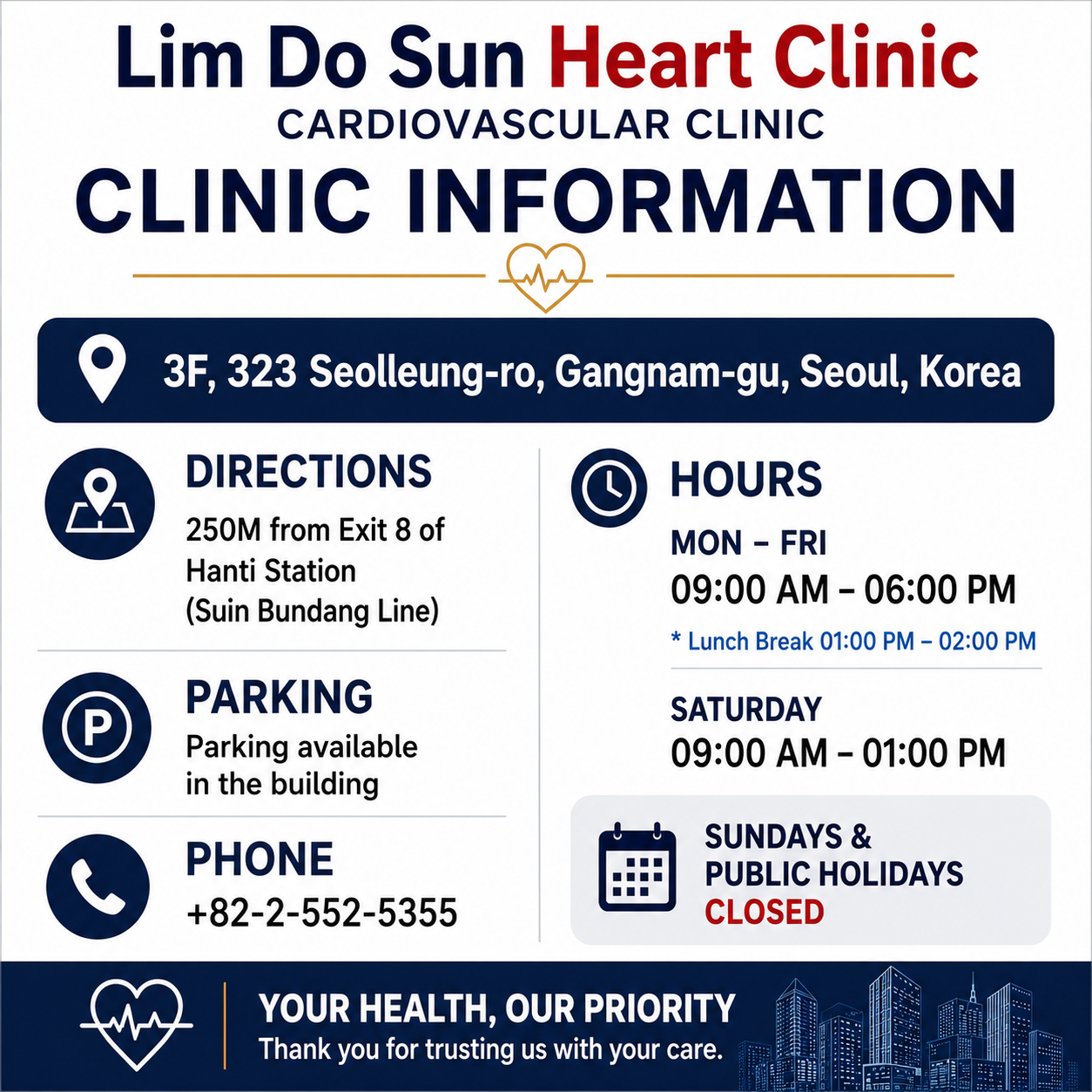
🏥 Getting ECG or Holter Monitoring in Seoul
An internal medicine or cardiology clinic can determine which test is more appropriate based on your symptoms.
Bring:
- A description of your symptoms
- How often they occur
- How long each episode lasts
- Your medication and supplement list
- Previous ECG results
- Information about caffeine, alcohol, and sleep
Confirm whether English-language support is available and whether the clinic offers 24-hour, 48-hour, or longer rhythm monitoring.
⚠️ When a Routine Rhythm Test Is Not Enough
Do not wait for scheduled Holter monitoring if palpitations occur with severe chest pressure, major breathing difficulty, fainting, or loss of consciousness.
For suspected acute heart problems, an ECG is commonly one of the first tests performed during emergency evaluation.
✨ Final Thoughts
An ECG and a Holter monitor measure the same basic thing—the heart’s electrical activity—but over very different periods of time.
A regular ECG is useful for problems present at the time of testing, while a Holter monitor is better for intermittent palpitations, dizziness, or rhythm changes that may be missed during a short ECG. The frequency of your symptoms helps determine which monitoring method is most useful.