Is Dizziness Related to Heart Disease?
Is Dizziness Related to Heart Disease?
Yes, dizziness can sometimes be related to heart disease, especially when the heart is beating too fast, too slowly, or irregularly and cannot maintain normal blood flow.
However, dizziness is not always a heart problem. Inner-ear disorders, dehydration, low blood sugar, medication side effects, and low blood pressure are also common causes.
💓 When Can the Heart Cause Dizziness?
Cardiovascular causes may include:
- Abnormal heart rhythms
- Very slow or fast heart rate
- Low blood pressure
- Heart valve disease
- Cardiomyopathy
- Reduced blood flow from cardiovascular disease
Arrhythmias can cause dizziness, lightheadedness, fainting, palpitations, and shortness of breath.
⚠️ Which Patterns Are More Concerning?
Heart-related dizziness deserves more attention when it:
- Occurs during exercise
- Happens with palpitations
- Causes near-fainting or fainting
- Appears with chest discomfort
- Occurs with unusual shortness of breath
- Happens suddenly while sitting or lying down
- Develops in someone with known heart disease
Dizziness or fainting can occur with arrhythmias and certain structural heart conditions.
👂 What if the Cause Is Not the Heart?
Non-cardiac causes are very common.
These may include:
- Inner-ear or balance disorders
- Dehydration
- Low blood sugar
- Medication side effects
- Heat exhaustion
- Anxiety
- Sudden drops in blood pressure when standing
A spinning sensation accompanied by hearing or balance problems may suggest an inner-ear cause rather than a primary heart problem.
🩺 What Tests May Be Needed?
The initial evaluation may include:
- Blood pressure and heart-rate measurement
- Blood pressure while lying and standing
- Resting ECG
- Blood tests
- Medication review
If an intermittent rhythm problem is suspected, your doctor may recommend a Holter monitor or longer-term rhythm monitor. An echocardiogram may be added when structural or valve disease is suspected.
📝 Keep Track of the Pattern
Before your appointment, note:
- When dizziness occurs
- How long it lasts
- Whether you were standing, resting, or exercising
- Whether the room feels like it is spinning
- Your heart rate if available
- Any palpitations, chest discomfort, or breathlessness
- Recent medication changes
The pattern can help determine whether evaluation should focus on the heart, blood pressure, inner ear, or another cause.
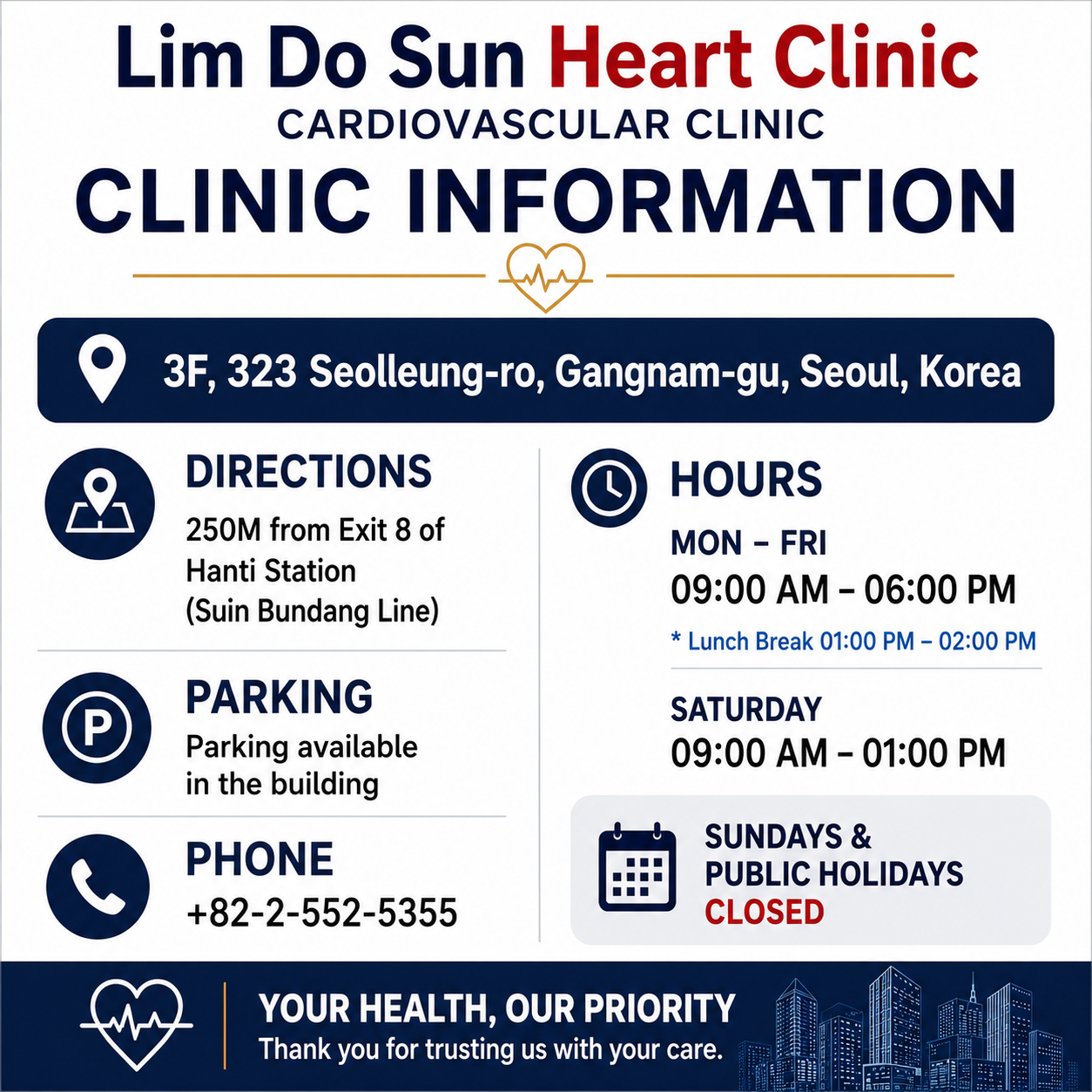
🏥 Getting Dizziness Checked in Seoul
An internal medicine clinic is usually a practical starting point for unexplained or recurrent dizziness. A cardiology evaluation may be appropriate when dizziness occurs with palpitations, fainting, exercise, or known cardiovascular disease.
Bring:
- Your medication and supplement list
- Home blood-pressure records
- Previous ECG or Holter results
- Notes describing your episodes
- Information about diabetes or heart disease
Confirm whether English-language support, ECG testing, and Holter monitoring are available.
🚑 When to Call 119
Call 119 in Seoul immediately if dizziness occurs with:
- Fainting or collapse
- Severe chest pressure
- Major breathing difficulty
- Sudden weakness or numbness
- Difficulty speaking
- Severe confusion
- Loss of consciousness
These symptoms may indicate a serious cardiovascular or neurological emergency. Seoul’s 119 emergency system provides medical response and interpretation support for foreign callers.
✨ Final Thoughts
Dizziness can be related to heart disease, particularly when it occurs with palpitations, fainting, chest discomfort, shortness of breath, or exercise.
But many cases come from non-cardiac causes such as dehydration, low blood pressure, inner-ear problems, or medication effects. Recurrent or unexplained dizziness should be evaluated based on the timing, triggers, accompanying symptoms, and heart rhythm rather than the sensation alone.