Seoul Cardiologist for Diabetes and High Cholesterol
Seoul Cardiologist for Diabetes and High Cholesterol
Having both diabetes and high cholesterol can significantly increase your risk of heart attack, stroke, and blood vessel disease—even when you feel healthy.
A cardiologist can evaluate your overall cardiovascular risk, while an internal medicine or endocrinology doctor continues managing your blood sugar and related health conditions.
❤️ Why These Conditions Need Careful Management
Diabetes can damage blood vessels over time, while high LDL cholesterol may contribute to plaque buildup inside the arteries.
Risk becomes higher when you also have:
- High blood pressure
- Kidney disease
- Obesity
- Smoking history
- Limited physical activity
- A family history of early heart disease
Managing blood sugar, cholesterol, blood pressure, kidney health, and lifestyle habits together is important for long-term heart protection.
🧪 What Tests May Be Included?
Your initial cardiovascular assessment may include:
- Blood pressure
- HbA1c or fasting glucose
- Total, LDL, and HDL cholesterol
- Triglycerides
- Kidney function
- Urine albumin testing
- Weight and lifestyle assessment
Some patients may also benefit from lipoprotein(a) or ApoB testing when inherited or unclear cardiovascular risk is involved.
💓 Do You Need Advanced Heart Tests?
An ECG, echocardiogram, stress test, or coronary imaging is not automatically necessary for everyone with diabetes and high cholesterol.
A cardiologist may recommend additional testing when you have:
- Chest pressure or tightness
- Shortness of breath during activity
- Reduced exercise ability
- Frequent palpitations
- Fainting or unexplained dizziness
- An abnormal ECG
- Known heart or blood vessel disease
Tests should be selected according to your symptoms, medical history, and overall cardiovascular risk.
💊 Reviewing Cholesterol and Diabetes Treatment
The cardiologist may review whether your LDL cholesterol is sufficiently controlled and whether your current treatment matches your risk level.
Your care plan may include:
- Statin or additional cholesterol-lowering medication
- Better blood pressure control
- Diabetes medication with heart or kidney benefits
- Weight management
- Smoking cessation
- Safe physical activity
- Dietary changes
People with diabetes and additional cardiovascular risk factors may require more intensive LDL-lowering treatment than lower-risk patients. Medication decisions should be personalized by the treating doctor.
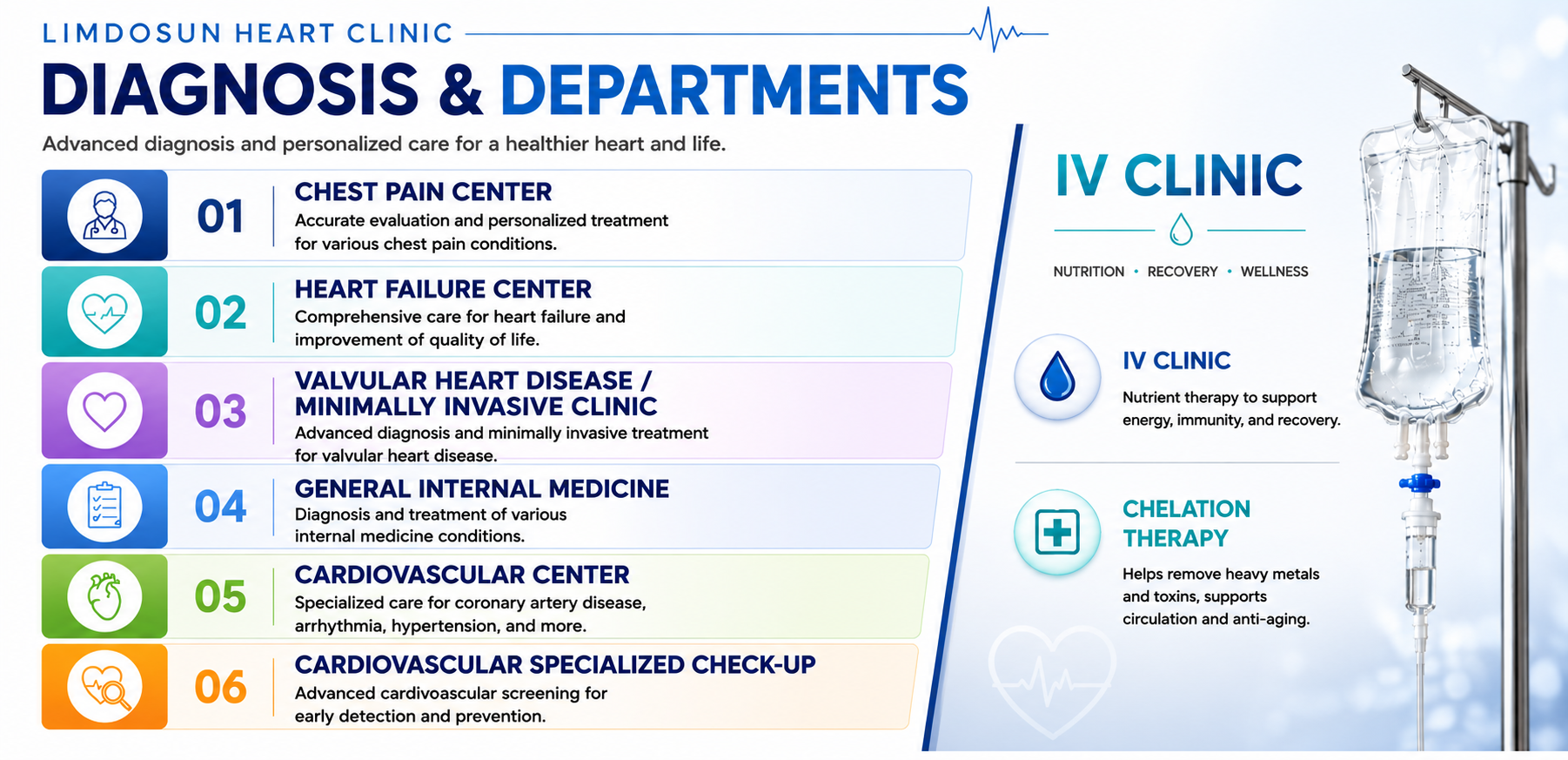
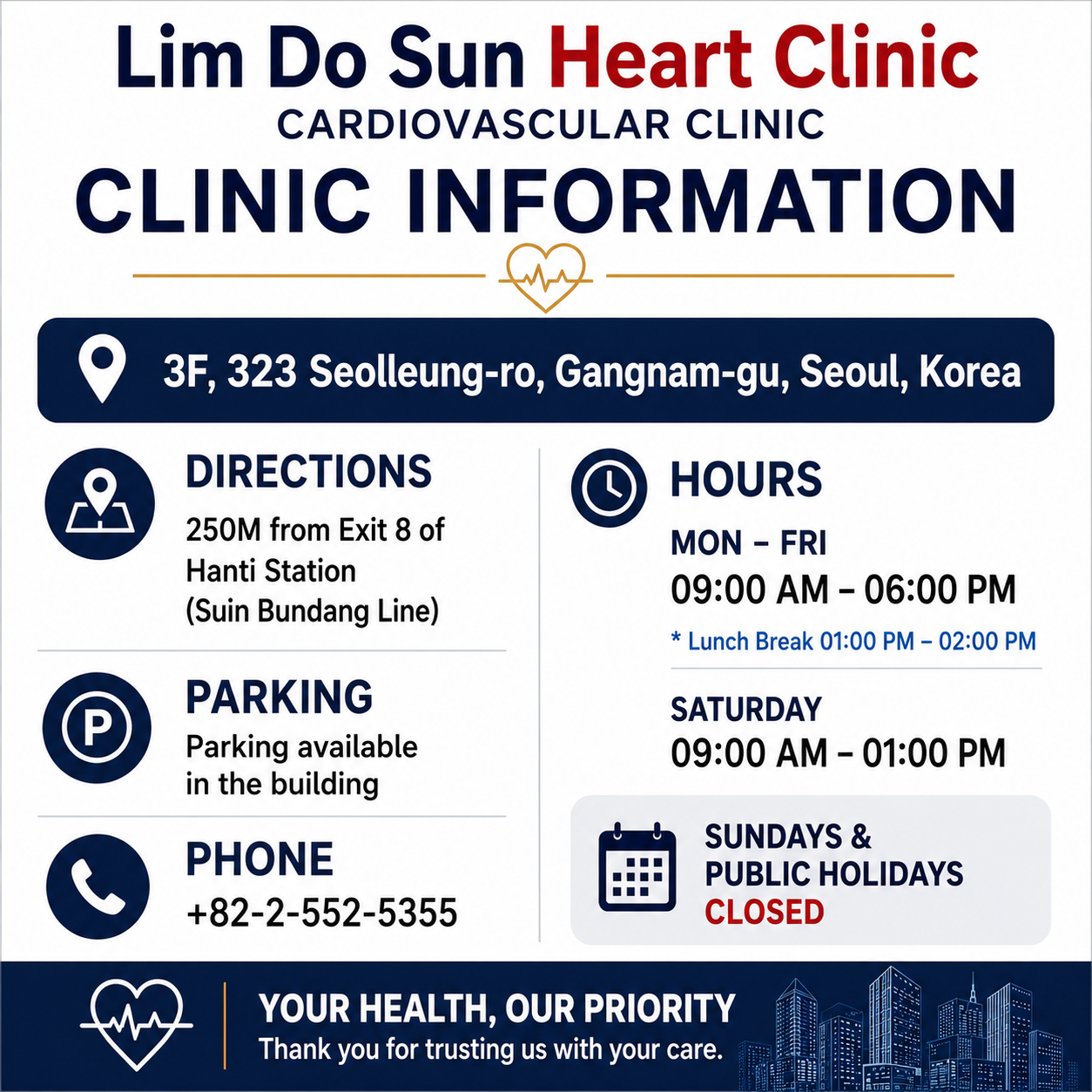
🏥 Getting Cardiovascular Care in Seoul
An internal medicine or endocrinology clinic is often a practical starting point for routine diabetes and cholesterol management.
Consider a cardiology clinic when:
- Your cholesterol remains high despite treatment
- You have chest symptoms or exercise-related breathlessness
- Several cardiovascular risks are poorly controlled
- Previous heart-test results were abnormal
- You already have heart, stroke, or vascular disease
Bring recent laboratory results, your medication list, home blood pressure records, and previous ECG or imaging reports. Confirm whether English-language support is available and whether fasting is required.
Eligible foreign residents may have access to NHIS health-checkup benefits, although coverage for specialist consultations and optional cardiac tests should be confirmed before booking.
🚑 When to Call 119
Call 119 in Seoul immediately if you experience:
- Severe or persistent chest pressure
- Pain spreading to the arm, back, neck, or jaw
- Sudden severe shortness of breath
- Fainting or collapse
- Cold sweating with nausea
- Sudden weakness or difficulty speaking
Do not wait for a routine cardiology appointment when serious symptoms are present.
✨ Final Thoughts
Diabetes and high cholesterol can affect the heart and blood vessels without causing early symptoms.
Regular monitoring of HbA1c, LDL cholesterol, blood pressure, kidney function, and subtle changes in exercise ability can help identify risks early. A cardiologist can then recommend targeted heart tests and treatment based on your individual condition rather than ordering every examination automatically.