Seoul Heart Clinic for Expat Professionals
Seoul Heart Clinic for Expat Professionals
Living and working in Seoul can make it easy to postpone cardiovascular care, especially when long hours, business travel, stress, and irregular meals become part of daily life.
For expat professionals, a heart evaluation can be useful when symptoms appear or when risk factors such as high blood pressure, high cholesterol, diabetes, smoking, kidney disease, or family history need closer management.
💼 When Should You Visit a Heart Clinic?
Consider an internal medicine or cardiology evaluation if you experience:
- Chest pressure or tightness
- Palpitations
- Shortness of breath with activity
- Unexplained dizziness or fainting
- Reduced exercise capacity
- Persistent high blood pressure
Exertional chest discomfort and breathlessness can be symptoms of coronary heart disease and deserve medical assessment.
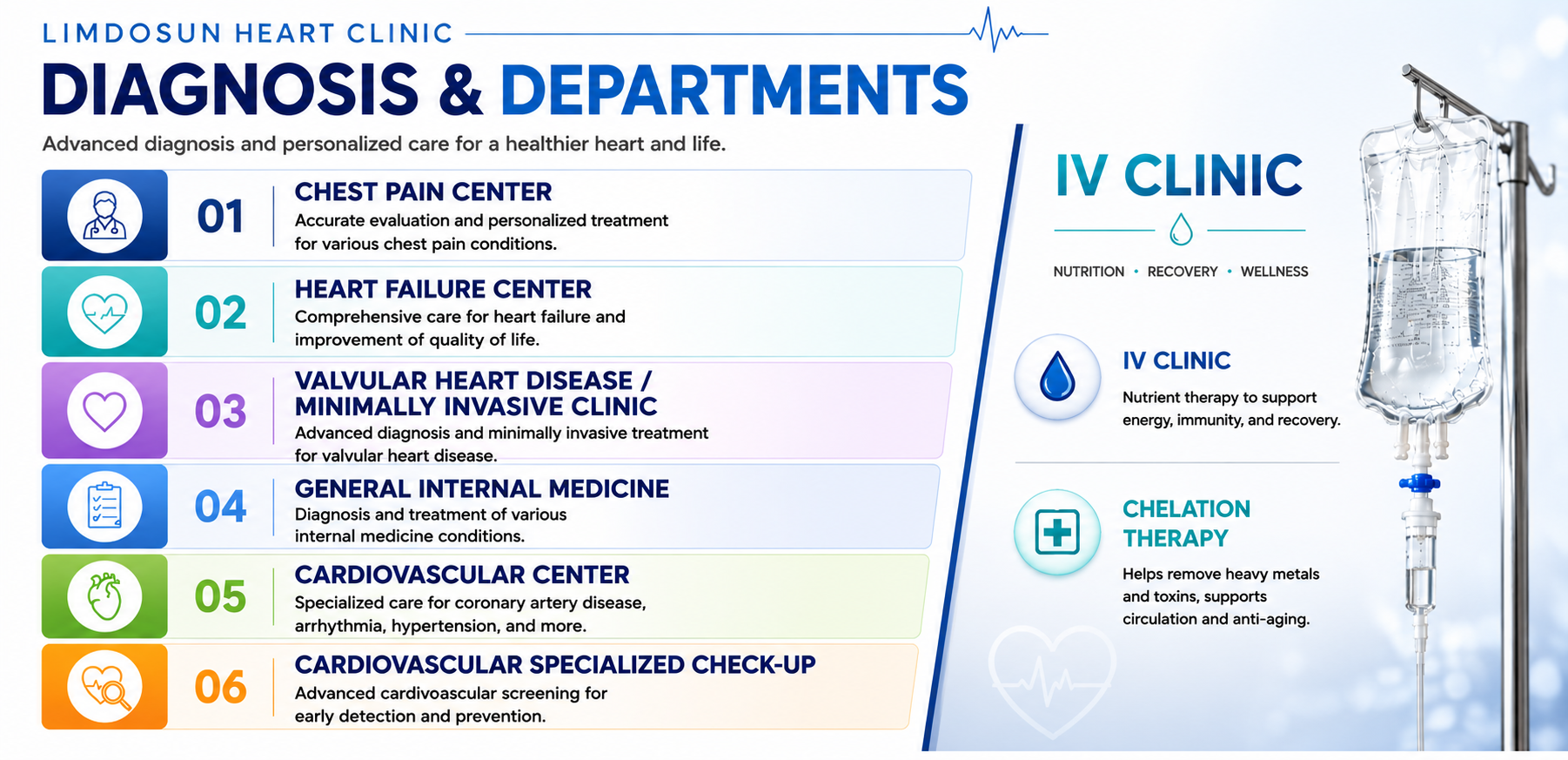
🩺 What Happens at the First Visit?
The doctor will usually begin with your symptoms, medical history, family history, medications, and cardiovascular risk factors.
Basic evaluation may include:
- Blood pressure and pulse
- Heart examination
- Resting ECG
- Cholesterol testing
- Blood glucose or HbA1c
- Kidney-function testing
Cardiovascular risk assessment commonly considers factors such as blood pressure, cholesterol, diabetes, kidney function, and family history rather than relying on a single test.
🫀 Do You Need an Echocardiogram or Stress Test?
Not every professional needs every available heart test.
Depending on your symptoms and examination, your doctor may recommend:
- ECG: Heart rhythm and electrical activity
- Holter monitor: Intermittent palpitations
- Echocardiogram: Heart structure, valves, and pumping function
- Exercise testing: Selected exercise-related symptoms
- Cardiac imaging: When coronary or structural disease requires further investigation
The appropriate test depends on symptoms, cardiovascular risk, previous results, and what condition is being investigated.
❤️ Preventive Care Matters Too
You do not need chest pain to start thinking about cardiovascular health.
Busy professionals should keep track of:
- Blood pressure
- LDL cholesterol
- Blood sugar
- Weight
- Exercise habits
- Smoking
- Sleep quality
- Family history
Managing high blood pressure, cholesterol, and glucose is central to preventing cardiovascular disease.
📋 Prepare for Your Appointment
To make a short appointment more productive, bring:
- Previous health-checkup results
- ECG or imaging reports
- Medication and supplement list
- Home blood-pressure readings
- Recent cholesterol and glucose results
- A short description of your symptoms
For palpitations or chest discomfort, note when symptoms occur, how long they last, and whether they happen during exercise, stress, or rest.
🌐 English Support and Insurance in Seoul
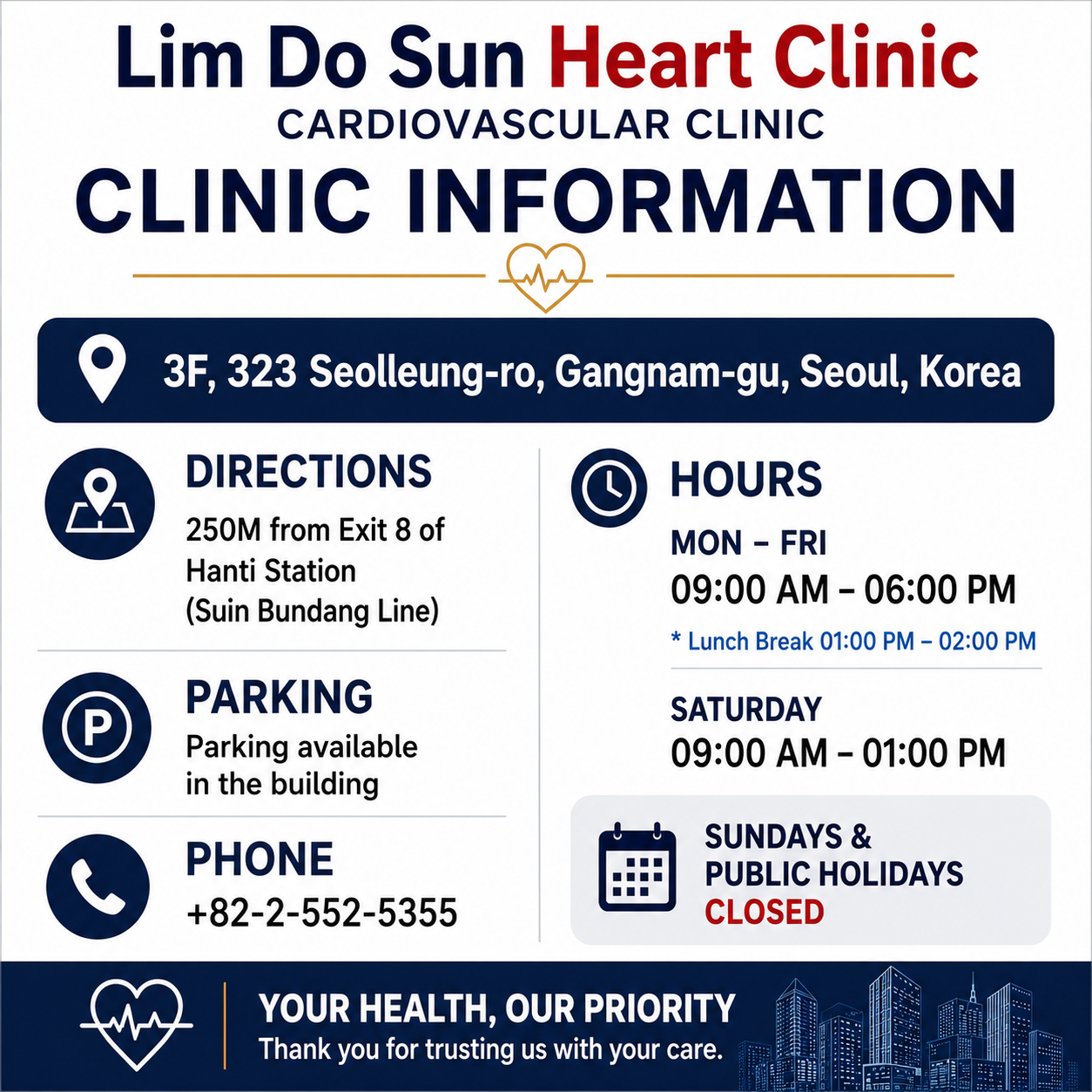
Before booking, confirm:
- English-language consultation availability
- Whether ECG or echocardiography can be performed on-site
- Appointment and test costs
- Whether Korean National Health Insurance applies
- Whether additional interpretation is available
Foreign residents enrolled in Korea’s National Health Insurance generally receive the same insurance-benefit coverage framework as Korean citizens, although patient costs vary by service and medical institution.
Seoul also operates medical interpretation support programs for foreign residents in qualifying situations, including serious illness, hospitalization, and surgery.
🚑 When to Call 119
Do not schedule a routine heart-clinic appointment if you are experiencing:
- Severe or persistent chest pressure
- Major breathing difficulty
- Fainting or collapse
- Sudden severe weakness
- Loss of consciousness
These symptoms require urgent assessment. In Seoul, 119 is used for emergency medical response.
✨ Final Thoughts
For expat professionals in Seoul, cardiovascular care can include both symptom evaluation and preventive risk management.
A practical starting point is to know your blood pressure, cholesterol, blood sugar, family history, and current symptoms. Rather than requesting every heart test, choose an internal medicine or cardiology evaluation where testing can be selected according to your individual cardiovascular risk and clinical findings.