What Blood Tests Can Help Detect Heart Disease?
What Blood Tests Can Help Detect Heart Disease?
No single blood test can detect every type of heart disease. Some tests estimate your future cardiovascular risk, while others help doctors identify heart muscle damage or possible heart failure.
The most appropriate tests depend on your symptoms, age, medical history, and existing risk factors.
🩸 Lipid Panel for Cardiovascular Risk
A lipid panel is one of the most common heart-related blood tests. It usually measures:
- Total cholesterol
- LDL cholesterol
- HDL cholesterol
- Triglycerides
High LDL cholesterol and triglycerides can increase the risk of plaque buildup in the arteries. However, abnormal cholesterol results indicate risk rather than confirming that an artery is already blocked.
🍬 Blood Sugar and Kidney Function Tests
High blood sugar and kidney disease can significantly increase cardiovascular risk.
Useful tests may include:
- Fasting blood glucose
- HbA1c
- Creatinine and estimated GFR
- Sodium and potassium
- Urine albumin testing
These results help doctors identify diabetes, kidney problems, and other conditions that may affect the heart or influence treatment decisions.
🧬 Lp(a), ApoB, and hs-CRP
Additional risk-marker tests may be helpful for selected patients:
- Lipoprotein(a), or Lp(a): An inherited cardiovascular risk factor
- Apolipoprotein B, or ApoB: Measures particles that can contribute to artery plaque
- High-sensitivity CRP: Measures inflammation associated with cardiovascular risk
Current cholesterol guidance recommends that adults consider measuring Lp(a) at least once during their lifetime. ApoB and hs-CRP may provide additional information when standard risk results are unclear.
❤️ Troponin for Possible Heart Muscle Damage
High-sensitivity troponin is commonly measured when a heart attack or other acute heart injury is suspected.
Doctors may order it for symptoms such as:
- New or severe chest pressure
- Shortness of breath
- Sweating or nausea with chest discomfort
- Pain spreading to the arm, back, neck, or jaw
An elevated troponin level indicates heart muscle injury, but it does not always mean a heart attack. The result must be interpreted with symptoms, an ECG, and other examinations.
🫀 BNP or NT-proBNP for Possible Heart Failure
A BNP or NT-proBNP test may be considered when symptoms suggest heart failure, including:
- Shortness of breath
- Swelling in the feet or ankles
- Difficulty breathing while lying down
- Unexplained fatigue
- Reduced exercise ability
An abnormal result may lead to further evaluation with an echocardiogram. Kidney function, age, and other health conditions can affect the result, so this test cannot diagnose heart failure by itself.
🏥 Getting Blood Tests in Seoul
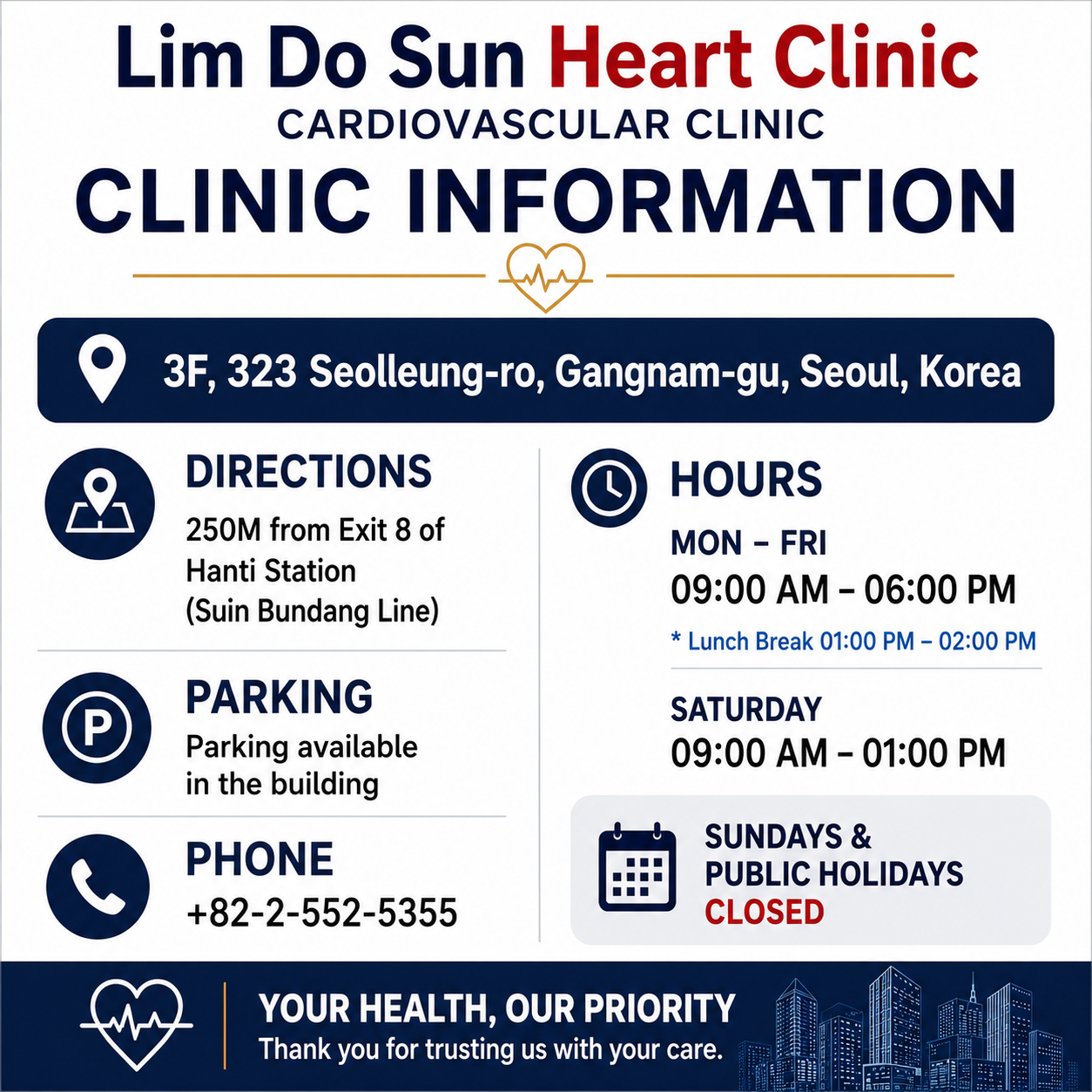
Foreign patients can usually begin at an internal medicine clinic for cholesterol, glucose, kidney function, and general cardiovascular risk testing.
A cardiology consultation may be appropriate when:
- You have chest pain or exercise-related breathlessness
- Your troponin or BNP result is abnormal
- You have several major cardiovascular risks
- Previous ECG or imaging results were abnormal
- Your doctor suspects heart failure or coronary artery disease
Confirm whether fasting is required, whether English-language support is available, and when you can receive a consultation about the results.
🚑 When Blood Testing Should Be Urgent
Do not book a routine blood test when you have severe or persistent chest pressure, sudden breathing difficulty, fainting, or pain spreading to the arm, back, neck, or jaw.
Call 119 in Seoul for emergency medical assistance. Blood tests such as troponin should be performed as part of an urgent medical assessment rather than through a routine screening appointment.
✨ Final Thoughts
Blood tests can help evaluate cholesterol-related risk, diabetes, kidney health, inflammation, heart muscle injury, and possible heart failure.
However, blood results cannot directly show every blocked artery, abnormal rhythm, or structural heart problem. Depending on your symptoms, your doctor may also recommend an ECG, echocardiogram, stress test, rhythm monitor, or cardiac imaging.